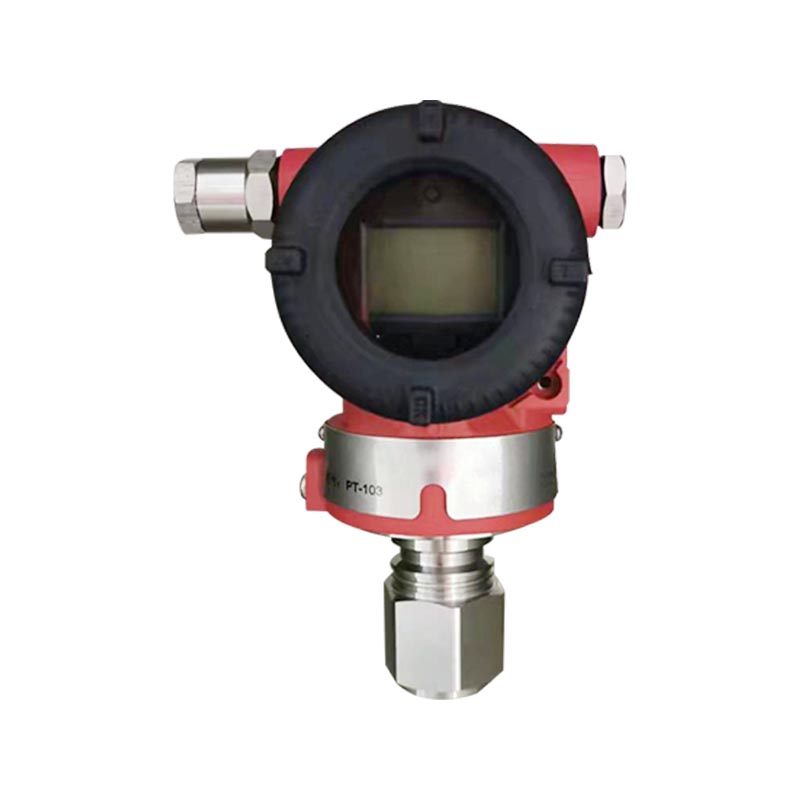
 XG3051T Differential pressure/absolute pressure transmitter
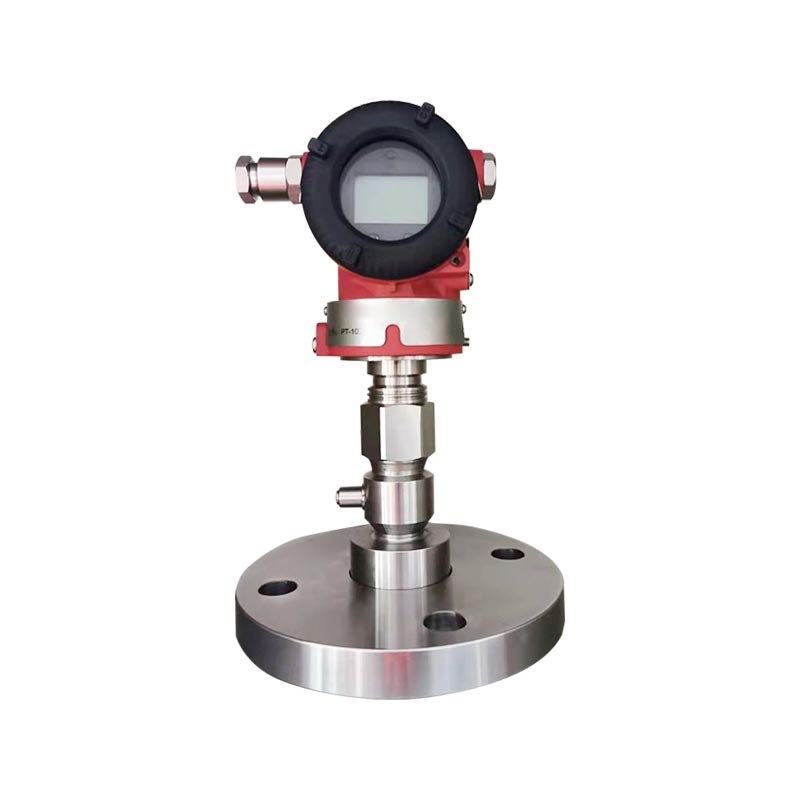 XG3051T Differential pressure/absolute pressure remote transmitter
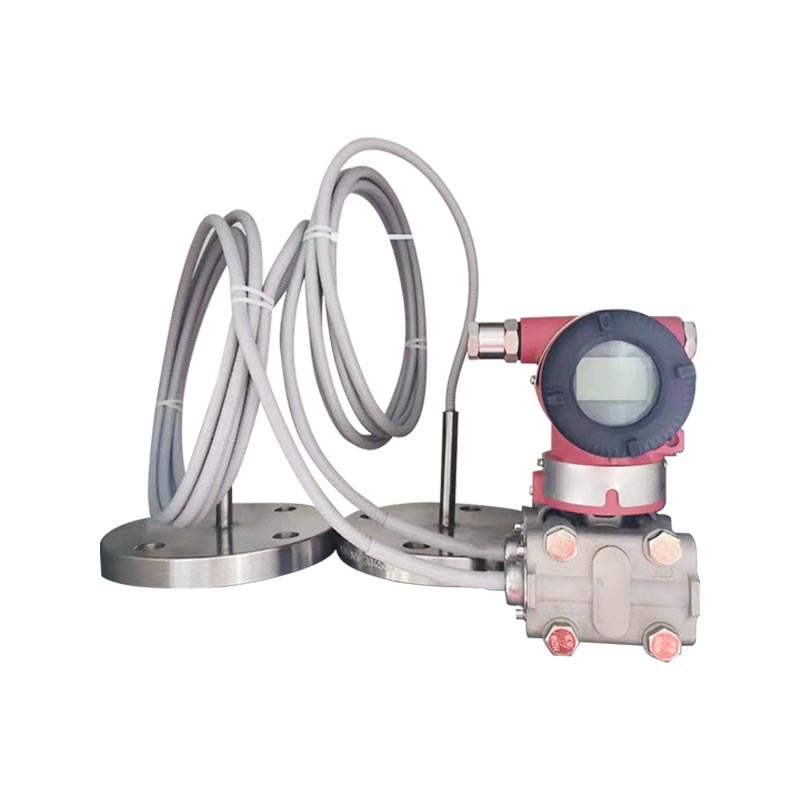 XG3051DP Differential pressure remote transmitter
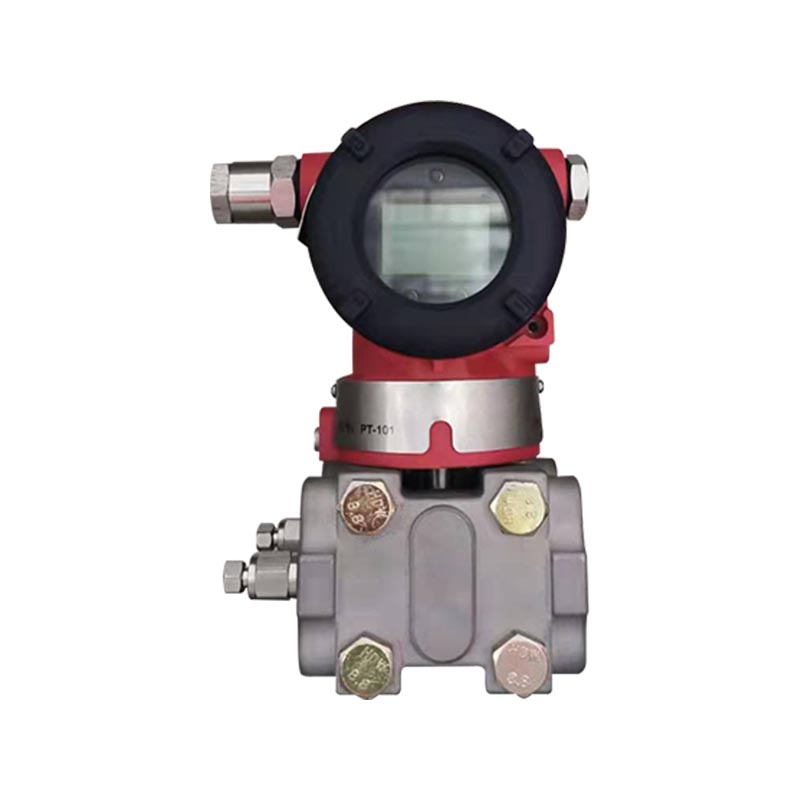 XG3051DP Differential pressure transmitter
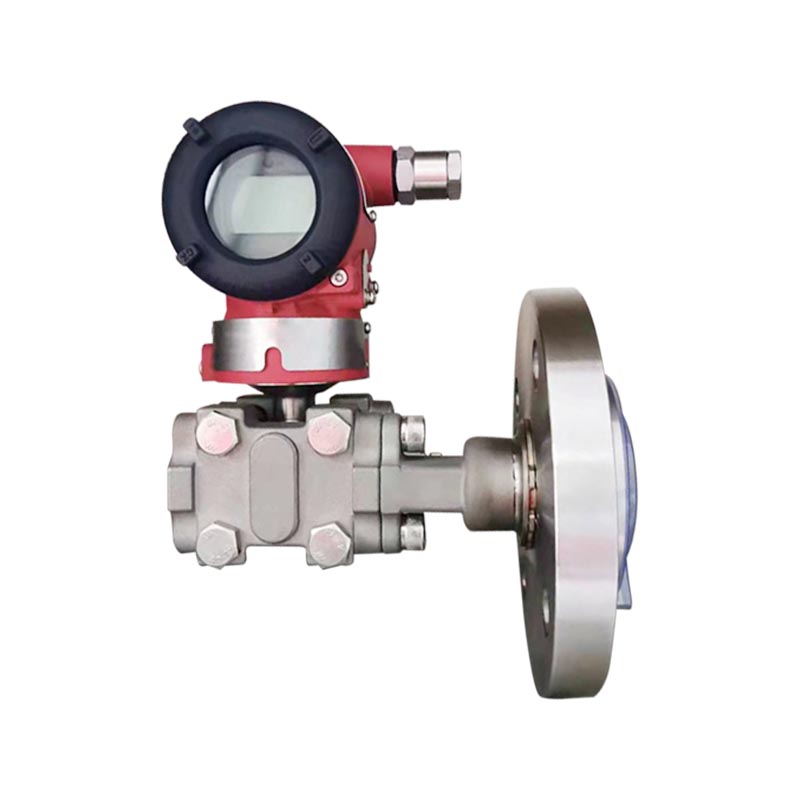 XG3051LT Differential pressure liquid level transmitter
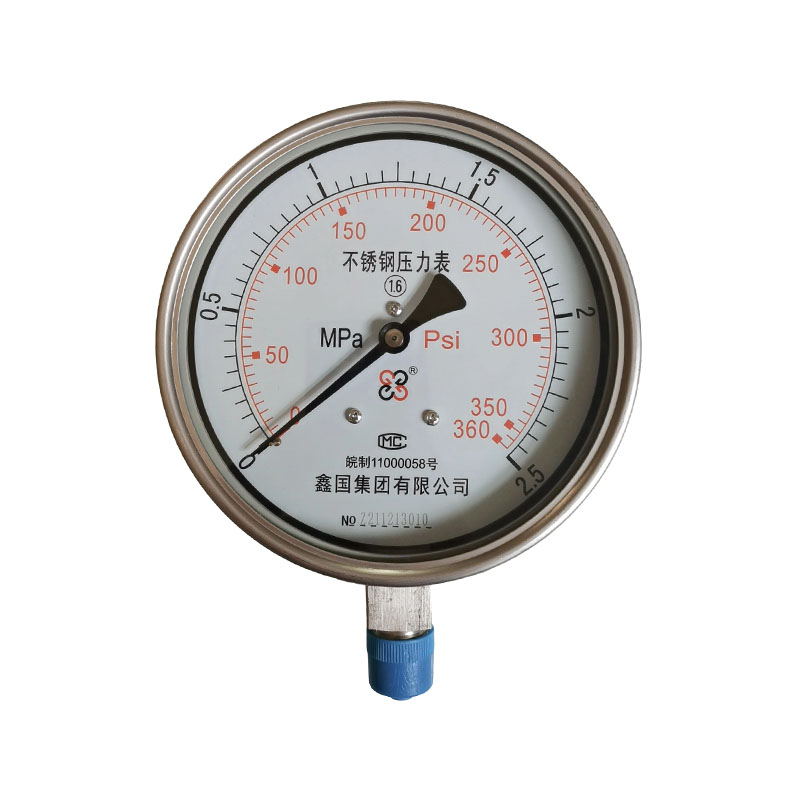 XG/Y-B series all stainless steel pressure gauge
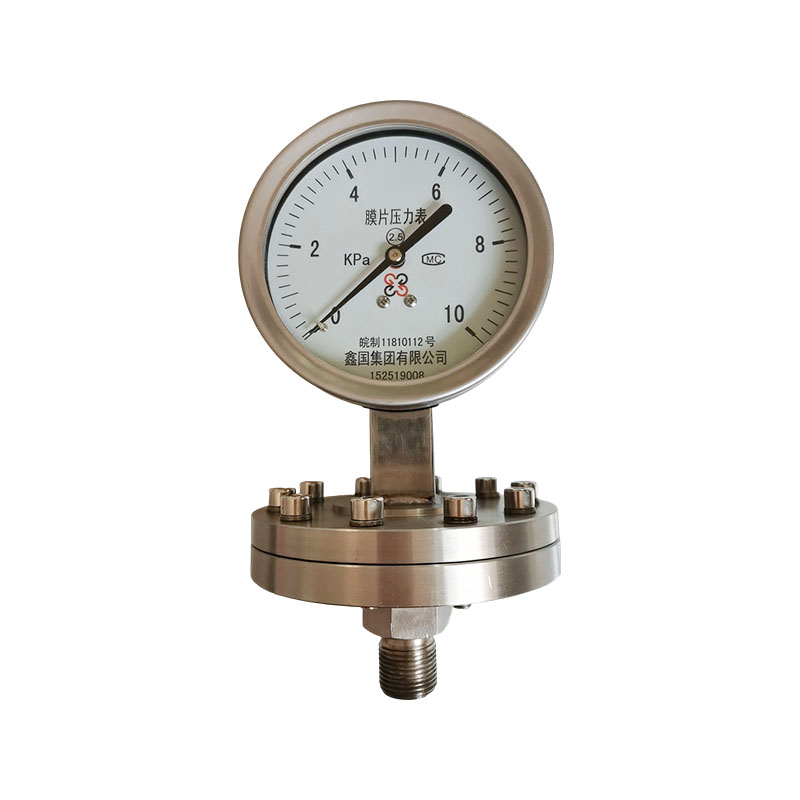 XG/Y-M series diaphragm pressure gauge
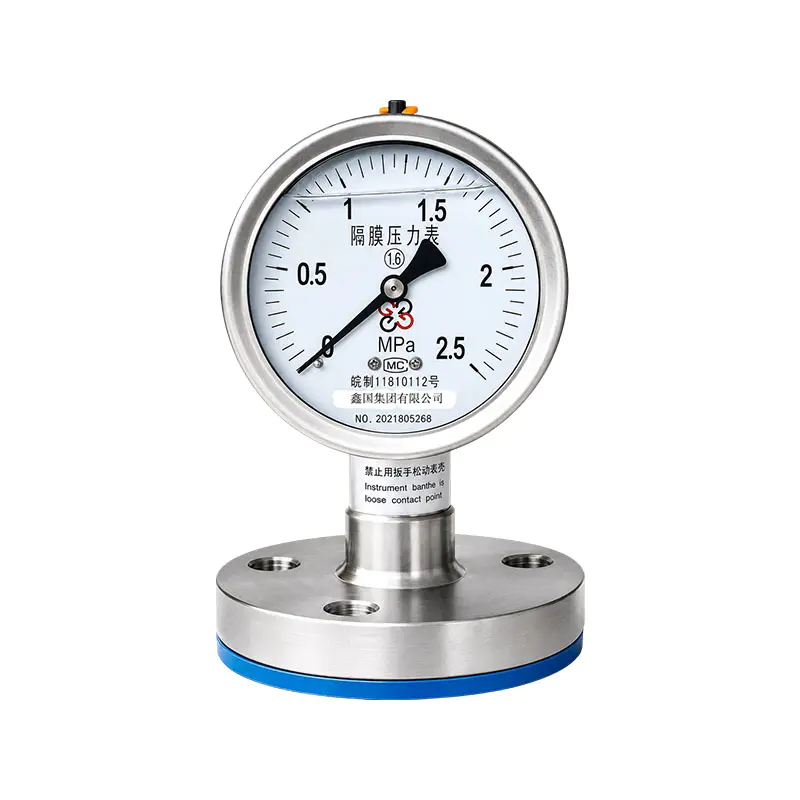 XG/Y-M sanitary diaphragm pressure gauge
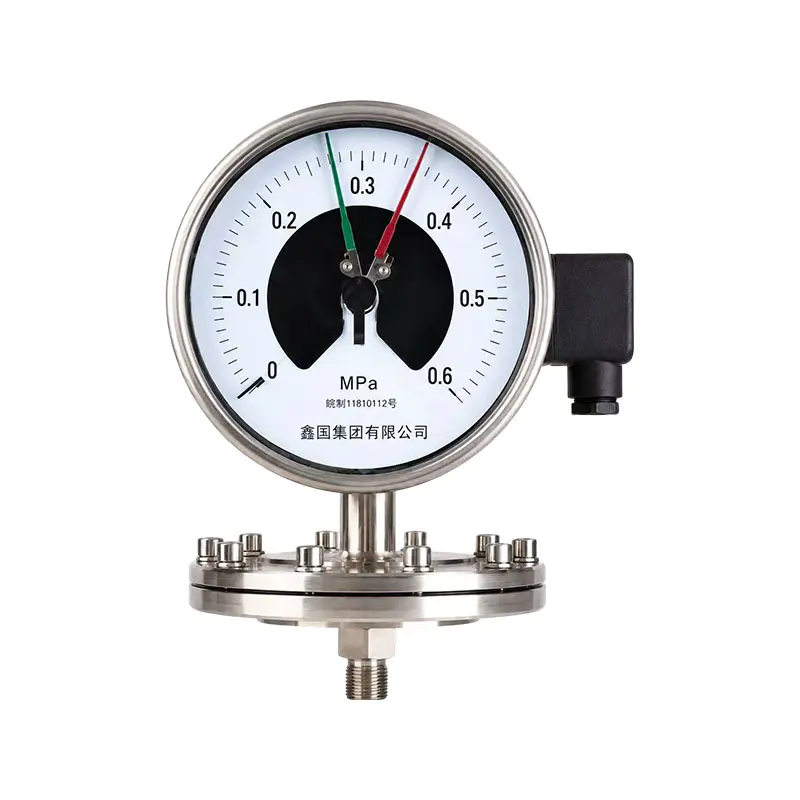 XG/YPF series diaphragm pressure gauge
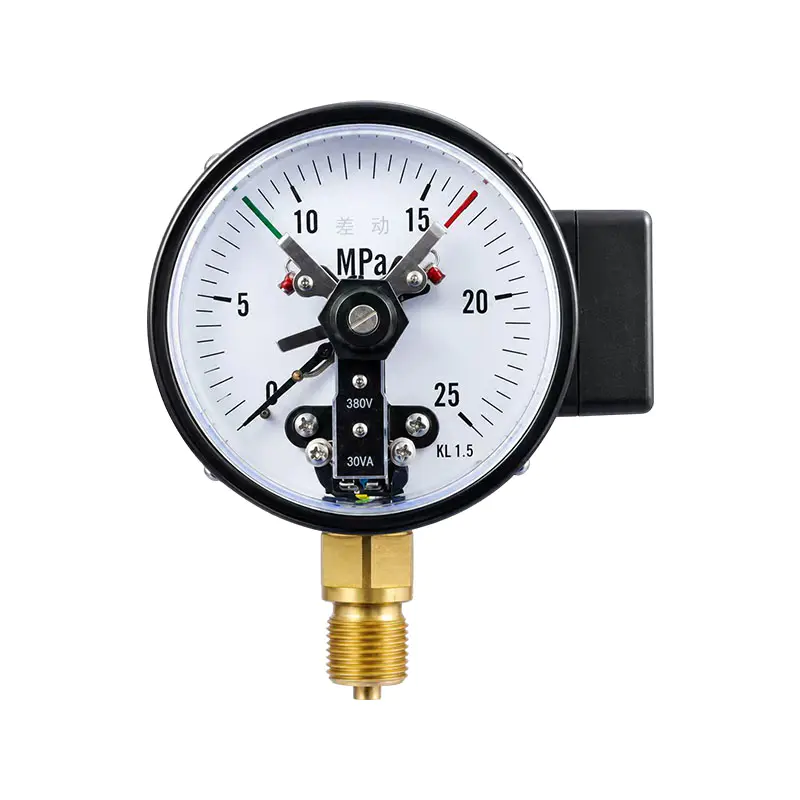 XG/YXC series magnetic assisted electric contact pressure gauge
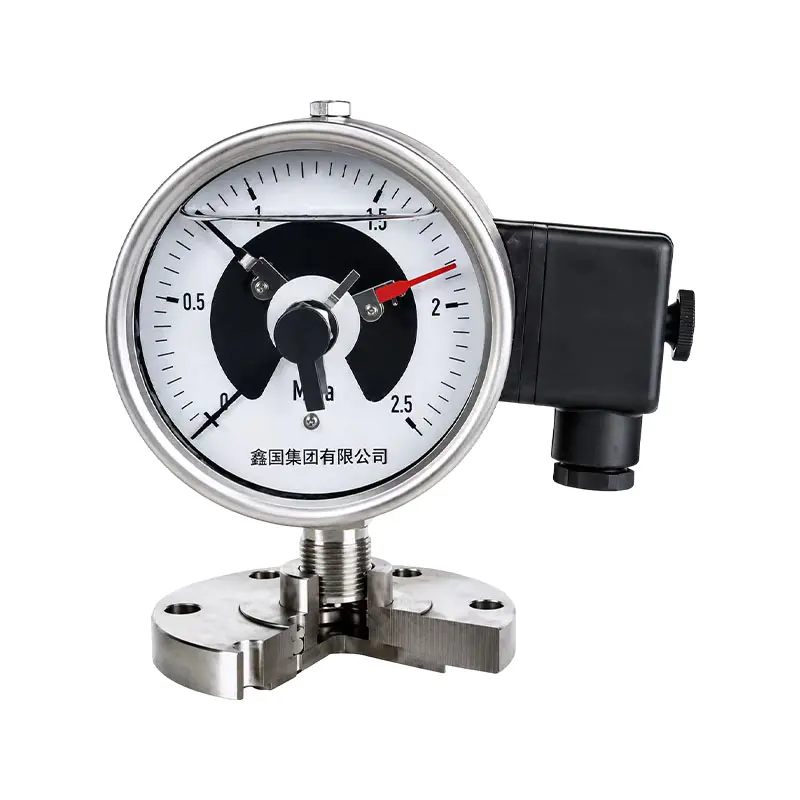 XG/YXC series special magnetic assisted electric contact pressure gauge
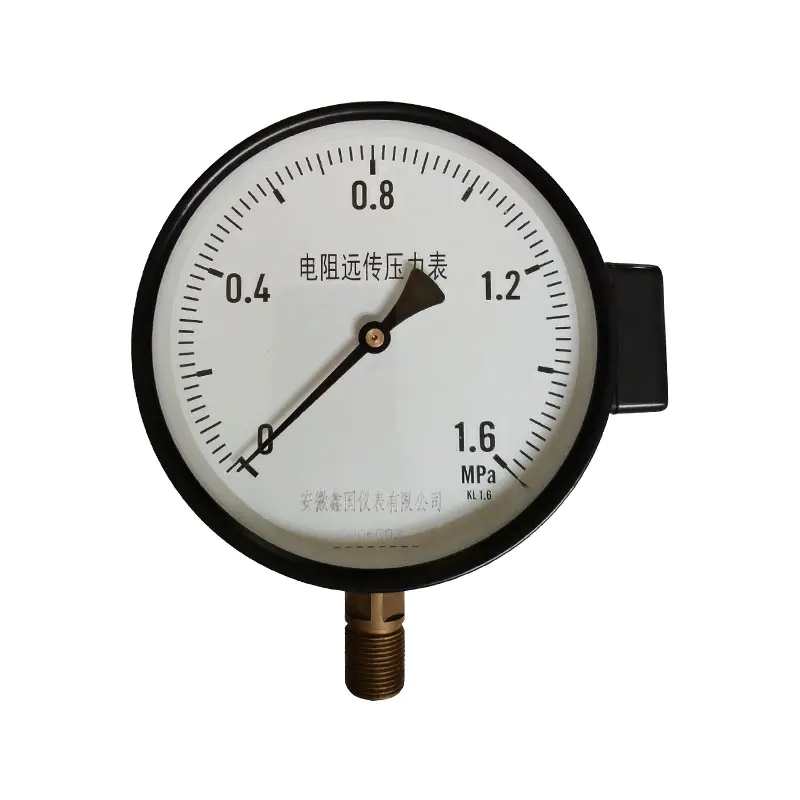 XG/YTZ-150 resistance remote transmission pressure gauge
1. Definition:
A pressure gauge is an industrial instrument used to measure and display the pressure of fluids (gases and liquids). It senses pressure through elastic sensitive elements (such as Bourdon tubes, diaphragms, bellows, or corrugated tubes), which deform under pressure. The transmission mechanism then drives the pointer or digital module to visually indicate the gauge pressure, absolute pressure, differential pressure, and other pressure values of the medium. It is widely used for pressure monitoring, safety alerts, and process control.
2. Key Features:
3. Applicable Industries:

Founded in
Cover an area of
Experienced employees
Building area
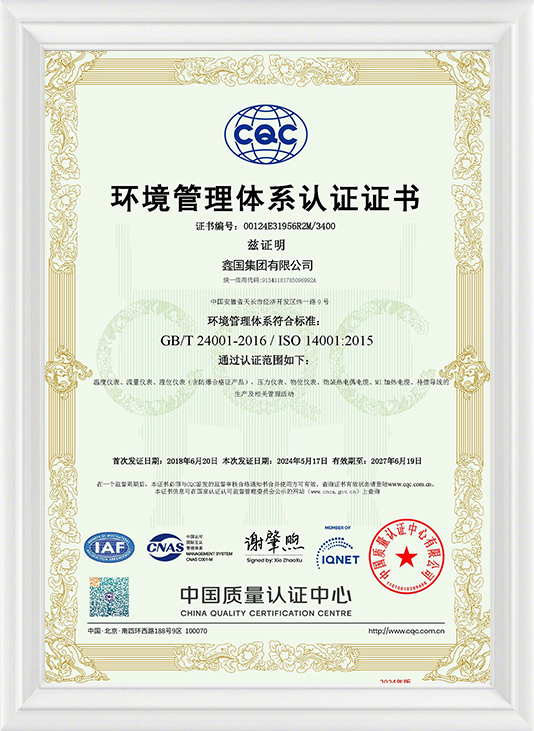
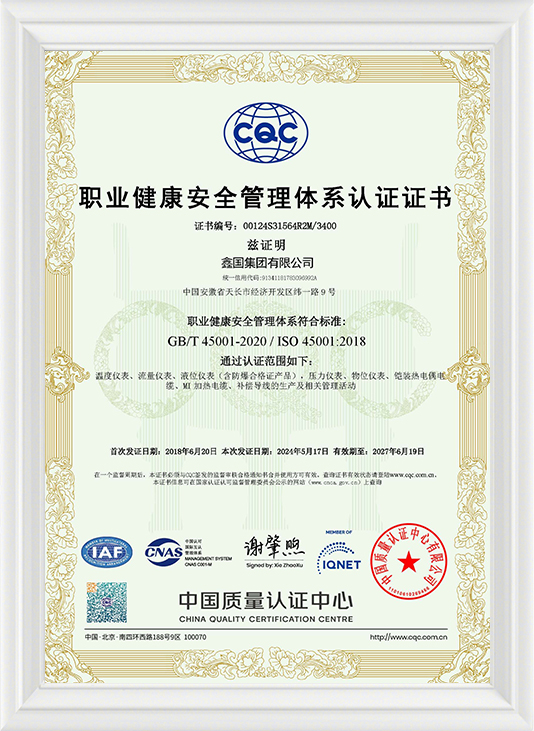

A heat-treatment line that replaced its protection tubes every six weeks did not have a thermocouple problem. It had a ceramic problem. The elements came out of service clean and unbroken, yet the tubes had cracked, spalled or bowed, and the drift that followed belonged to the t...

The first sign that something is wrong with a thin film RTD is rarely a dramatic failure. It is a slow disagreement with a neighbouring sensor, a reading that creeps during a heat-up cycle, or a batch trend that no longer matches the recipe. In one case, a food processor replace...
A dairy processor in eastern China spent three weeks chasing a pasteurizer fault that turned out to be one crossed thermocouple extension wire inside a junction box. The recorder kept writing believable numbers the whole time, which is precisely why the investigation took so lon...
A heat-treat line running at 900 degrees Celsius will usually consume a Type K thermocouple in eight to fourteen months. The same probe sitting in a clean water loop at 90 degrees Celsius often survives eight years or more. Nothing about the two probes looks different on a datas...
A pressure gauge is an industrial instrument used to measure and display the pressure of fluids, including gases and liquids. It senses pressure through elastic sensitive elements—such as diaphragms, capsules, or Bourdon tubes—which deform under applied pressure. The transmission mechanism then drives a pointer or digital module to visually indicate gauge pressure, absolute pressure, differential pressure, or other pressure values of the process medium, supporting pressure monitoring, safety alerts, and process control across industrial systems.
Depending on the internal sensing geometry, this instrument family can cover measurement needs spanning micro pressure, low pressure, medium pressure, high pressure and ultra-high pressure, which is one reason this category is specified across such a wide span of industrial sectors. This category groups three related pressure measurement solutions built around this shared sensing principle. A Diaphragm Pressure Gauge uses a flexible diaphragm element that isolates the sensing mechanism from the process medium, making it well suited to viscous, corrosive, or particulate-laden fluids. A Stainless Steel Pressure Gauge is defined primarily by its wetted-part and case material, offering improved corrosion resistance in harsh or humid environments compared with standard carbon steel construction. A Capsule Pressure Gauge uses a pair of corrugated diaphragms welded together to form a capsule element, which is particularly effective for very low pressure measurement where a standard Bourdon tube would lack sufficient sensitivity. This page reviews the common types and characteristics within this category, key performance features, applicable industries, working principles, application guidance, a detailed comparison, maintenance practices, and frequently asked questions to support informed technical selection.
Each pressure gauge type in this category addresses a distinct combination of process medium, pressure range, and environmental exposure. Understanding these distinctions supports selecting the correct instrument for a given installation point rather than defaulting to a single familiar configuration.
A Diaphragm Pressure Gauge uses a thin, flexible metal or composite diaphragm as the sensing element, which deflects proportionally under applied pressure and transmits this movement to the pointer mechanism through a linkage or capillary system. Because the diaphragm can be manufactured in a corrosion-resistant or lined material and mounted with a flush or extended process connection, this configuration is commonly specified for viscous, crystallizing, or particulate-laden media where a direct-mount Bourdon tube gauge would be prone to clogging. Diaphragm pressure gauges can measure pressure as low as 10 in.H2O (25 mbar) and typically offer overpressure protection up to five times the full scale value.
A Stainless Steel Pressure Gauge is distinguished by its case and, in many configurations, its wetted-part construction, using stainless steel alloys to resist corrosion from humidity, chemical exposure, or outdoor weathering. This construction is frequently paired with a liquid-filled case in applications involving vibration, since the fill fluid dampens pointer flutter and reduces wear on internal movement components, extending service life in demanding mechanical environments. Maximum permitted process temperatures for stainless steel wetted parts typically should not exceed 100°C.
A Capsule Pressure Gauge employs two corrugated diaphragm discs joined at their outer edges to form a sealed capsule, which expands and contracts along its axis as pressure changes. This construction produces a larger, more sensitive mechanical displacement than a single diaphragm at very low pressure levels. Capsule gauges are commonly used for gas distribution monitoring, draft pressure measurement in combustion systems, and other applications operating well below standard Bourdon tube sensitivity thresholds—as low as 1″ water column (2.5 mbar). Accuracy for capsule gauges can reach up to ±1.0% of span.
Diaphragm types isolate sensitive components from direct contact.
Stainless steel types resist humidity and chemical exposure.
Capsule types provide sensitivity below standard Bourdon range.
Beyond the specific sensing element used, buyers evaluating a Diaphragm Pressure Gauge, Stainless Steel Pressure Gauge, or Capsule Pressure Gauge generally look at a shared set of performance characteristics that determine whether the instrument will hold up under real operating conditions. These characteristics span measurement coverage, mechanical durability, environmental resistance, installation flexibility, and the auxiliary functions built into the instrument beyond a simple pointer reading. Reviewing these factors together, rather than focusing on a single specification, gives a more complete picture of how a gauge will perform once installed on an actual process line.
Taken together, these performance factors explain why this instrument category is treated less as a single fixed product and more as a configurable platform, where sensing element, case material, connection type, and auxiliary function are selected jointly to match a specific installation rather than adapting the process to a single standard unit.
Because the sensing element, case material and functional options within this category can be combined in so many ways, these gauges are found across a broad range of industrial sectors rather than being limited to a single niche application. The common thread across these sectors is a need for dependable, easy-to-read pressure indication at a specific point in a pipeline, vessel, or piece of rotating equipment, often under conditions of vibration, corrosive exposure, or tight process tolerances. The table below outlines several representative sectors along with the typical monitoring points where a Diaphragm Pressure Gauge, Stainless Steel Pressure Gauge, or Capsule Pressure Gauge is commonly installed.
| Industry Sector | Typical Monitoring Points |
|---|---|
| Petrochemical | Oil and gas pipelines, reactors, storage tanks, compressors and refining units |
| Power and Energy | Boilers, steam turbines, thermal power piping, pumps and auxiliary station equipment |
| Metallurgy and Steel | Blast furnace and converter systems, rolling mill equipment, hydraulic and pneumatic stations |
| Mechanical Manufacturing | Air compressors, refrigeration equipment, machine tool hydraulics, injection molding machines and pressure vessels |
| HVAC, Sanitation and Water Supply | Water supply pipelines, heating systems, central air conditioning and fire protection networks |
| Food and Pharmaceutical | Sterilization equipment, fermenters, fluid transfer lines and clean process systems |
Xinguo Group Co., Ltd. develops and supplies pressure, temperature, level and flow instrumentation supporting several of these sectors. The Group's products are widely applied in power, petroleum, chemical, metallurgy, building materials, machinery, food, aerospace, new energy and other industrial sectors, as well as scientific research and education fields. This reflects a broader engineering approach in which pressure gauges are considered alongside related instrumentation and process valves as part of a complete measurement system.
All three product types convert applied pressure into a mechanical displacement, which is then translated into a visible reading through a gear-and-pinion or linkage transmission mechanism connected to a graduated dial. The difference between the three categories lies primarily in the shape and material of the elastic sensing element, since a Diaphragm Pressure Gauge flexes as a flat or corrugated disc, while a Capsule Pressure Gauge uses two joined discs to amplify displacement at low pressure, and a Stainless Steel Pressure Gauge may use any of these element types housed in a corrosion-resistant case.
As process pressure acts on the diaphragm or capsule surface, the element deforms elastically within its designed range, and this deformation is proportional to the applied pressure across the instrument's calibrated span. For a diaphragm gauge, pressure pushes against a flexible corrugated metal disk to move the pointer. For a capsule gauge, two corrugated discs fused together create a circular capsule; the slightest pressure change causes the capsule to deflect, and a pinion transfers this motion to the indicator. The transmission linkage converts this small linear or axial movement into a larger rotational movement at the pointer shaft, allowing a compact sensing element to drive a full-scale dial reading.
The case material and internal movement construction determine how well the gauge withstands vibration, humidity, and temperature extremes. Liquid-filled stainless steel cases are frequently specified together for installations subject to mechanical vibration, since the fill fluid both lubricates the movement and dampens pointer oscillation. For applications with extreme process or ambient temperatures, accessories such as cooling towers, siphon tubes, and diaphragm seals are used to separate and protect the instrument from the process heat source.
Before reviewing the chart below, it helps to understand why pressure range coverage is one of the first factors engineers check when narrowing down a gauge selection. Different sensing element geometries respond with different sensitivity levels, and an element that is too stiff for the applied pressure will produce a reading that barely moves off the dial's lower stop. Capsule elements are engineered specifically to maximize displacement at very low pressure levels—down to 1″ water column (2.5 mbar)—where a flat diaphragm or Bourdon tube would show negligible movement. Diaphragm elements cover a broader low-to-moderate range, down to 10 in.H2O (25 mbar), and are frequently chosen more for their media compatibility than for extreme sensitivity. Stainless steel construction can be paired with any of these sensing elements, so its position in a range comparison depends on which internal element it houses. Bourdon tube gauges, by comparison, typically have a lower range limitation around 10 psi (690 mbar).
The horizontal bar chart above represents a general engineering reference for pressure range coverage across the three product categories. Capsule gauges occupy the narrowest but most specialized band, concentrated at the very low end of the pressure spectrum where amplified sensitivity from the dual-diaphragm construction is essential for a usable reading. Diaphragm gauges extend across a wider low-to-moderate range, reflecting their common use across process industries where media compatibility, rather than extreme range, is the primary selection driver. Stainless steel gauges show the widest bar in this comparison because the stainless steel designation refers to case and wetted-part material rather than a specific sensing geometry, meaning stainless steel construction can be found across low, moderate, and high pressure Bourdon tube, diaphragm, or capsule instruments alike. This distinction is important for buyers who may initially compare these three categories as if they were mutually exclusive, when in practice a stainless steel case is frequently combined with either a diaphragm or Bourdon tube element depending on the application. For very low pressure gas distribution or draft measurement points, a capsule element remains the practical choice regardless of case material. For general industrial process lines carrying moderate to high pressure in a humid or corrosive environment, a stainless steel gauge built around a Bourdon tube or diaphragm element is the more common specification. Recognizing this layered relationship between sensing element and case material helps buyers read pressure gauge datasheets more accurately rather than assuming range and material are always tied to a single fixed configuration. Xinguo Group Co., Ltd. offers configurable combinations across these categories, allowing buyers to specify sensing element and case material independently based on their specific process requirements. Overall, this chart illustrates that range coverage should be evaluated at the sensing-element level first, with case material treated as a separate, complementary specification.
Selecting among these three gauge types starts with identifying the process medium's characteristics, the expected pressure range, and the surrounding installation environment. Process lines carrying viscous fluids, slurries, or media prone to crystallization typically call for a Diaphragm Pressure Gauge, since the flush or extended diaphragm face resists clogging in a way that a direct Bourdon tube connection cannot. Installations in humid, outdoor, or chemically exposed environments generally benefit from a Stainless Steel Pressure Gauge, where case corrosion resistance protects the internal movement and dial visibility over long-term outdoor or washdown exposure. For very low pressure gaseous media—such as fan and blower monitoring, filter monitoring, low-pressure pneumatic systems, and vacuum pumps—a Capsule Pressure Gauge is the appropriate choice due to its amplified sensitivity at low pressure levels.
Very Low Pressure MonitoringGas distribution networks, combustion draft measurement, and cleanroom differential pressure points typically call for a Capsule Pressure Gauge due to its amplified sensitivity at low pressure levels. |
Vibration-Prone InstallationsPump discharge lines and compressor stations subject to mechanical vibration often specify a liquid-filled Stainless Steel Pressure Gauge to dampen pointer flutter and protect internal movement components. |
Beyond medium compatibility and pressure range, dial size, process connection type, and mounting orientation also factor into a sound selection. For reliable readings, the operating pressure should sit in the middle third of the scale, since fatigue and over-range set-off degrade accuracy near full span. Xinguo Group Co., Ltd. offers configurable dial diameters, thread connections, and diaphragm lining materials so the gauge can be matched precisely to the installation point. For applications combining corrosive media with very low pressure, such as certain chemical vent or scrubber monitoring points, a stainless steel case may be specified together with a capsule sensing element, illustrating that these three categories are not always mutually exclusive but can be combined to address compound operating conditions.
A radar-style comparison is useful when several performance factors need to be weighed together across gauge types rather than read from separate rows of a table. The chart below compares media compatibility, corrosion resistance, low-pressure sensitivity, and vibration tolerance across the three categories introduced earlier. Viewing these factors together clarifies why each type occupies a distinct role rather than competing directly on a single metric. This approach mirrors how engineers typically evaluate instrument specification, weighing several requirements simultaneously rather than optimizing one property in isolation. The visualization complements the bar chart above by focusing on relative shape rather than absolute range values alone.
The radar chart shows the Diaphragm Pressure Gauge profile extending further along media compatibility, reflecting its design advantage of isolating the sensing element face from direct contact with viscous or particulate-laden fluids that could otherwise clog a Bourdon tube or capsule assembly. The Capsule Pressure Gauge profile, by contrast, extends further along low-pressure sensitivity, which is consistent with its dual-diaphragm construction specifically engineered to amplify displacement at very low applied pressure. Both profiles show moderate and comparable response speed, since neither construction is optimized primarily for fast-changing pressure transients compared with electronic pressure transmitters. Corrosion resistance for both types depends heavily on the specific wetted-part and case material selected rather than the sensing geometry itself, which is why this factor often shifts significantly when either element type is paired with a stainless steel case. Vibration tolerance likewise depends more on whether the gauge is liquid-filled and how the movement is mounted than on the diaphragm or capsule geometry alone. This comparison demonstrates that neither type is universally superior, but each is shaped by a deliberate design trade-off matched to a specific process condition. A facility measuring clean, moderate-pressure gas would generally find a standard diaphragm or Bourdon tube configuration sufficient, since the capsule element's amplified low-pressure sensitivity would not be fully utilized in that setting. Conversely, a facility monitoring combustion draft pressure or cleanroom differential pressure would likely find that only a capsule element provides a usable, readable deflection at such low applied pressure. Engineers frequently use this kind of side-by-side comparison during instrument specification review to avoid selecting an oversensitive or undersensitive element for the actual process range. This approach helps ensure the selected gauge provides a stable, readable indication across its intended operating band rather than sitting too close to either end of its mechanical travel. Overall, the radar chart reinforces that gauge selection within this category should be guided by the dominant requirement at the installation point, whether that is media compatibility, low-pressure sensitivity, or a combination addressed through complementary case material choices.
The table below summarizes key selection factors across the three product categories in this collection, providing a practical quick reference before consulting detailed technical datasheets for a specific installation.
| Product Type | Primary Advantage | Typical Application | Pressure Range |
|---|---|---|---|
| Diaphragm Pressure Gauge | Media isolation, clog resistance | Viscous or particulate-laden process lines | Down to 10 in.H2O (25 mbar) |
| Stainless Steel Pressure Gauge | Corrosion resistance, durability | Humid, outdoor, or vibration-prone points | Depends on sensing element |
| Capsule Pressure Gauge | Very low pressure sensitivity | Gas distribution, draft, differential monitoring | Down to 1″ H2O (2.5 mbar) |
Accuracy is a critical specification when selecting a pressure gauge for any application. Different gauge types and sizes offer varying accuracy classes, and understanding these differences helps ensure the selected instrument meets the process requirements without over-specifying. The chart below presents a comparative view of typical accuracy classes available across the three product categories. Capsule gauges typically achieve accuracy up to ±1.0% of span, with variation according to nominal size. Diaphragm gauges are commonly available in Class 1.0, 1.6, or 2.5 depending on the specific model and size. Stainless steel pressure gauges, depending on the sensing element and construction, can range from Class 1.0 to Class 2.5. The larger the dial size, the better the gauge is able to detect and display pressure changes with higher resolution. Accuracy classes are defined according to standards such as EN 837, which runs from ±0.1% for test gauges to ±2.5% for general service.
The horizontal bar chart above illustrates the typical accuracy class ranges across the three product categories. Capsule gauges with larger nominal sizes (100 mm and 160 mm) can achieve ±1.0% of span accuracy, making them suitable for applications where precise low-pressure measurement is required. Diaphragm gauges offer a range of accuracy classes from Class 1.0 for higher-precision applications to Class 2.5 for general industrial service. Stainless steel pressure gauges span a similar range, with Class 1.0 and Class 1.6 available for 100 mm and 160 mm dial sizes, and Class 2.5 for 63 mm dial sizes. It is important to note that accuracy is influenced not only by the gauge's design but also by operating conditions such as temperature, vibration, and pressure fluctuations. When the operating temperature deviates from the reference temperature of 20°C, additional temperature-induced errors may occur—typically around 0.04% per degree Celsius. For applications requiring the highest precision, larger dial sizes and higher accuracy class gauges should be selected. For general monitoring and safety applications where absolute precision is less critical, standard Class 2.5 gauges provide a cost-effective solution. Understanding these accuracy trade-offs helps engineers select the right gauge for each specific measurement point without over-specifying or under-specifying the instrument.
Routine inspection extends service life across all three gauge types, though specific checks vary somewhat by construction. Diaphragm gauges should be checked for signs of coating wear or residue buildup on the process-side face, since accumulated deposits can gradually reduce diaphragm flexibility and slow the gauge's response to actual pressure changes. Stainless steel gauges, particularly liquid-filled variants, should be inspected for fill fluid level and case seal integrity, since a compromised seal can allow fill fluid loss and expose the movement to moisture ingress over time. Capsule gauges warrant periodic zero-point verification, since their amplified sensing geometry can be more susceptible to small mechanical drift than a standard diaphragm or Bourdon tube element operating at a higher pressure range.
Working with a manufacturer that documents sensing element material and case construction specifications makes it easier for maintenance teams to set realistic inspection intervals based on actual product design rather than generic assumptions. Xinguo Group Co., Ltd., through its manufacturing capabilities, engages in the research, development, and production of pressure instruments alongside temperature, level, and flow instrumentation, supporting an integrated approach where pressure sensing elements, case materials, and complementary process components are considered together as part of a complete measurement system.
Q1: When is a Diaphragm Pressure Gauge preferred over a standard Bourdon tube gauge?A Diaphragm Pressure Gauge is generally preferred when the process medium is viscous, particulate-laden, or prone to crystallization, since its flush or extended sensing face resists clogging that would affect a direct Bourdon tube connection. |
Q2: What makes a Stainless Steel Pressure Gauge suitable for harsh environments?A Stainless Steel Pressure Gauge uses corrosion-resistant case and wetted-part materials, and is often paired with a liquid-filled movement to withstand humidity, chemical exposure, and mechanical vibration in outdoor or industrial settings. |
Q3: Where is a Capsule Pressure Gauge typically installed?A Capsule Pressure Gauge is typically installed at very low pressure measurement points, such as gas distribution networks, combustion draft monitoring, fan and blower monitoring, or cleanroom differential pressure applications. |
Q4: Can diaphragm and capsule elements be combined with a stainless steel case?Yes, sensing element type and case material are generally specified independently, so a diaphragm or capsule element can be housed within a stainless steel case when both corrosion resistance and specific sensing characteristics are required together. |
Q5: Can these pressure gauges be customized for specific installation needs?Yes, dial size, process connection thread, diaphragm lining material, and liquid-filling can typically be adjusted based on the specific pressure range and process medium at the installation point. |
Q6: Which industries rely on this pressure gauge category most heavily?Petrochemical, power and energy, metallurgy and steel, mechanical manufacturing, HVAC and water supply, and food and pharmaceutical sectors are among the most common users, each relying on a different combination of sensing element and case material. |
Q7: How often should pressure gauges be calibrated?Calibration frequency depends on the application and operating conditions. Some applications may require more frequent calibration than others. Regular inspection and zero-point verification are recommended as part of routine maintenance. |
Q8: Are overpressure protection options available within this category?Yes, diaphragm pressure gauges typically offer overpressure protection up to five times the full scale value, and special versions are available with higher overpressure safety ratings. Structural options addressing overpressure protection are available across the category. |



 INQUIRY
 English
 عربى
عربى русский
 中文简体
中文简体
