XG/Y-M series diaphragm pressure gauge Manufacturers
Home / Product / Pressure instruments / Pressure gauge / XG/Y-M series diaphragm pressure gauge
  • XG/Y-M series diaphragm pressure gauge
  • XG/Y-M series diaphragm pressure gauge

XG/Y-M series diaphragm pressure gauge

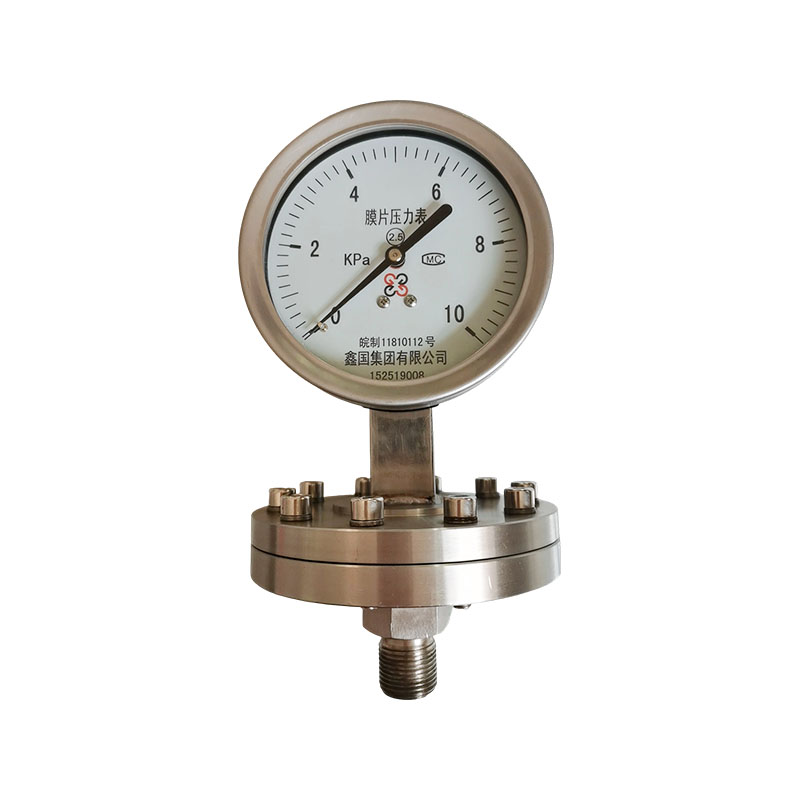
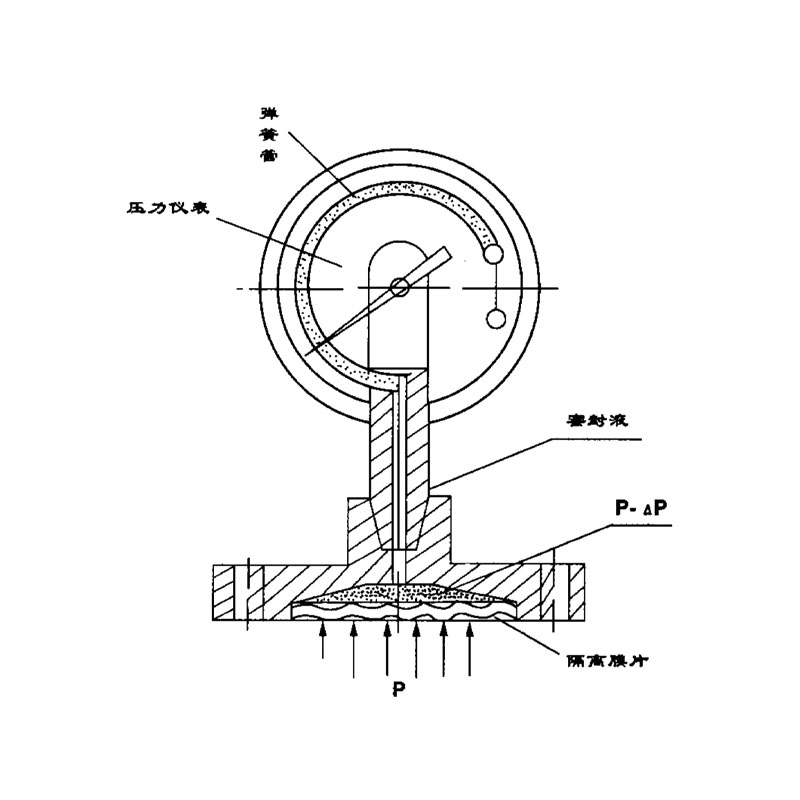
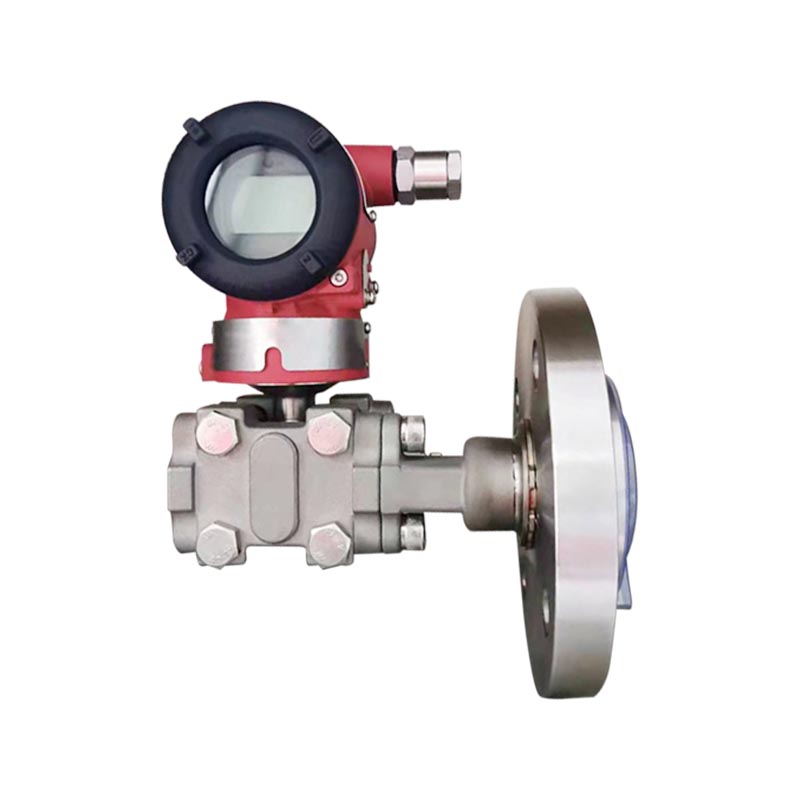
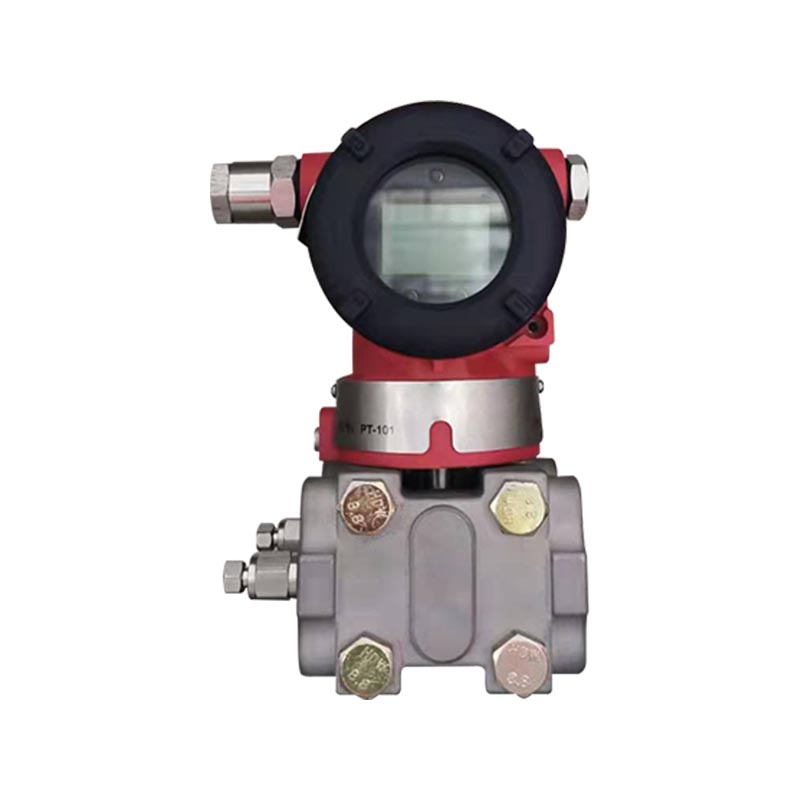
The XG/Y-M series diaphragm pressure gauge is an indirect pressure measuring instrument composed of a pressure gauge head and a diaphragm isolator. The tested medium only contacts the isolation diaphragm and flange/joint and does not enter the interior of the pressure gauge head. The pressure of the medium drives the deformation of the diaphragm membrane, and through the sealed pressure-transmission fluid filled inside the isolator, the pressure is transmitted to the spring tube of the meter head, achieving local pressure display.

Product advantages:
1. Isolation and protection to safeguard the instrument movement
The measured medium is completely separated from the internal movement of the pressure gauge by a diaphragm membrane. Corrosive, high-viscosity, easily crystallized, and solid-particle-containing media will not directly contact the sensitive components of the pressure gauge, avoiding corrosion, blockage, and damage to the movement.
2. Adapt to harsh and complex media
It can measure highly corrosive liquids, viscous slurries, and media with impurities, which cannot be handled by ordinary stainless steel pressure gauges. Diaphragm gauges can also be used to expand the applicable medium range of pressure gauges.
3. Anti-clogging, not easy to get stuck on the meter
The medium will not enter the internal flow channel of the meter, and there will be no problems such as crystal accumulation, particle jamming, or pointer jamming, greatly reducing the probability of failure.
4. Wide range of material options
The diaphragm membrane can be made of various materials such as 316L, Hastelloy, Monel, PTFE, etc., and can be flexibly selected for different strong corrosion conditions to meet the measurement needs of chemical special media.
5. Stable measurement performance
Internally filled with pressure transmission isolation fluid, the pressure transmission is sensitive and accurate, the pressure signal is stable, and the measurement accuracy is reliable; Can be used with ordinary, shock-resistant, electric contacts, and an all-stainless-steel body.
6. Flexible installation form
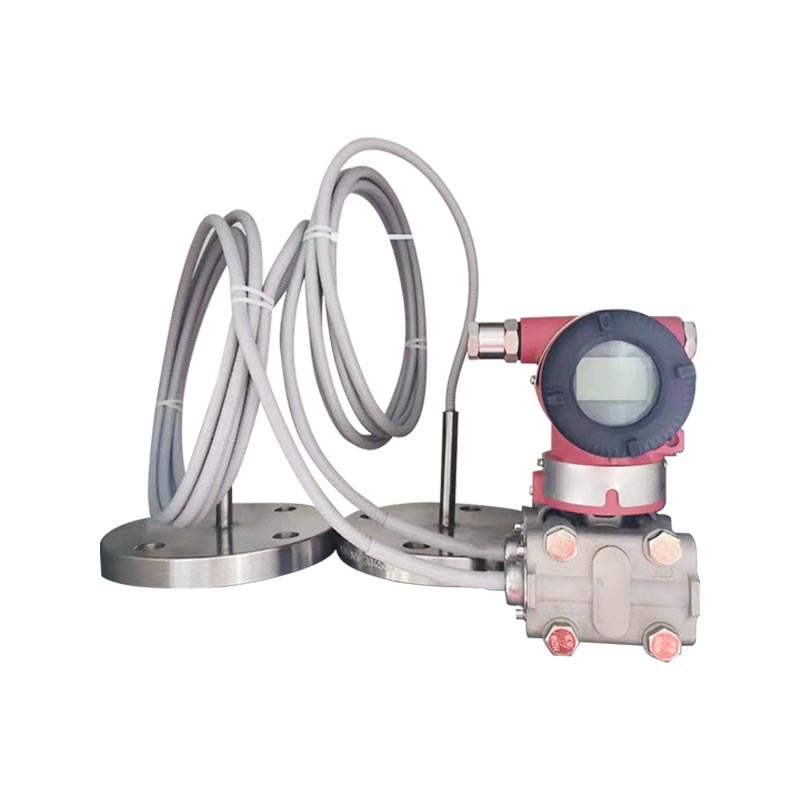
There are direct, flange, and threaded options, and it can also be equipped with remote diaphragm devices, which facilitate different installation interfaces for tanks and pipelines and facilitate disassembly and maintenance.       

Main selling points:
1. The diaphragm isolation structure completely separates the medium from the movement, preventing corrosion and blockage, and preventing pointer jamming and movement damage.
2. Suitable for complex and harsh media, it can measure high-viscosity, easily crystallizing, particle-carrying, and strongly corrosive media, solving working conditions that cannot be measured by ordinary pressure gauges.
3. Multiple materials are available for the membrane, including 316L, Hastelloy, PTFE, etc., which can be flexibly selected for different corrosion scenarios and have strong adaptability.
4. Multiple connection methods, including thread and flange options, can be paired with shock-resistant and electric contact heads to meet pressure measurement and alarm control needs.
5. Safe and durable, blocking the leakage of hazardous media, reducing the frequency of instrument replacement, and reducing on-site maintenance costs.      

Specification FAQ

Temperature Characteristics of Diaphragm Pressure Gauge
The system of a diaphragm pressure gauge is filled with sealing liquid as a pressure-transmitting medium. Therefore, its temperature effect is related to the volume expansion coefficient of the sealing liquid, diaphragm stiffness, and the temperature of the pressure-bearing part. The influence is particularly obvious for low-range pressure instruments. Generally, the specified temperature error of the pressure-bearing part shall not be greater than 0.1%/°C. Thus, the total temperature effect of a diaphragm pressure gauge is the sum of the temperature effect of a general pressure gauge and the temperature effect on the pressure-bearing part of the diaphragm seal.

Liquid Level Difference of Diaphragm Pressure Gauge
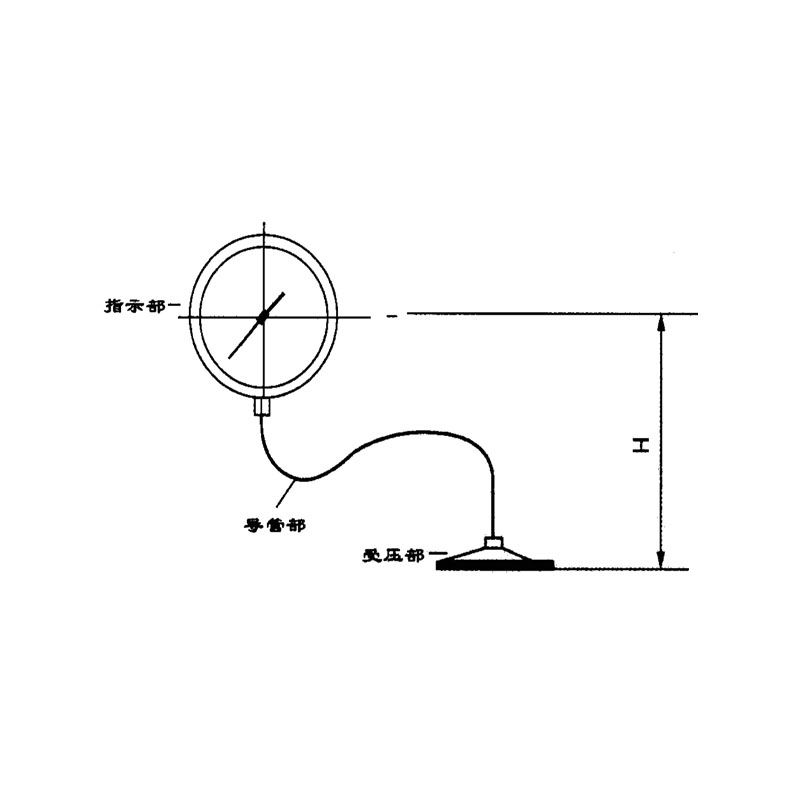
Especially for diaphragm pressure gauges with a flexible connecting capillary, a liquid level difference effect ΔP will occur when the pressure-bearing diaphragm and general pressure gauge are installed at different elevations. This factor shall be taken into consideration for precise measurement.

\△P=d·h    d- Specific gravity of sealing liquid; h - Liquid level difference
100011-uT3j 100002-S9dF

Corrosion Resistance of Diaphragm Pressure Gauge

The corrosion resistance of a diaphragm pressure gauge can be guaranteed by properly selecting materials for the diaphragm, flange, and sealing gasket that are in contact with the measured medium.
Diaphragm materials: 0Cr17Ni12Mo2 (316), Monel alloy (Cu30Ni70), Hastelloy (H276C), Tantalum (Ta), and fluoroplastic F4.
Flange materials: Stainless steel 0Cr17Ni12Mo2 (316); stainless steel lined with fluoroplastic (316+F4).
Sealing gasket materials: Nitrile rubber, fluororubber, silicone rubber, and fluoroplastic.

Flange Selection
Common flange series standards are compiled in accordance with GB (China), HGJ (Ministry of Chemical Industry), DIN (Germany), JIS (Japan), ANSI (USA), and other flange standards, as well as domestic practical application conditions for users’ selection. Special orders of other specifications from users are also acceptable.

Selection of Sealing Liquid
To ensure the reliability and safety of diaphragm pressure gauge operation, suitable sealing liquid shall be selected according to different applications.

Sealing Liquid Temperature Range of Pressure-bearing Part Specific Gravity g/cm³ Volume Expansion Coefficient 1/°C Application
High-viscosity Silicone Oil -10~200°C 1.07 0.95×10⁻³ For high-temperature service
Low-viscosity Silicone Oil -30~100°C 0.94 1.08×10⁻³ General service
Glycerin Aqueous Solution -5~100°C 1.27 0.61×10⁻³ Food-grade service
Vegetable Oil -5~100°C 0.93 1.03×10⁻³ Food-grade service
Fluorine Oil -30~150°C 1.93 0.75×10⁻³ Hydrogen, Oxygen

Q1: What is the difference between a diaphragm pressure gauge and an ordinary stainless steel pressure gauge?
A: The medium of ordinary stainless steel pressure gauges will directly contacts the internal spring tube; The diaphragm pressure gauge relies on the diaphragm to completely separate the process medium from the meter head movement. Suitable for strongly corrosive, viscous, crystalline, and granular media to prevent corrosion and blockage of the movement. Diaphragm pressure gauges are preferred for harsh media that cannot be handled by ordinary stainless steel gauges.

Q2: How to choose the membrane material?
A: 316L membrane is generally used for weak corrosion conditions; Use Hastelloy alloy for strong acid-base and chemical media; Due to strong corrosion and high permeability of the medium, a PTFE-lined membrane can be selected, and the selection needs to be confirmed based on the actual composition of the medium.

Q3: Can diaphragm pressure gauges withstand vibration?
A: Sure, selecting an oil-filled and shock-resistant diaphragm pressure gauge for the meter head can cope with vibration and pressure pulsation conditions such as pumps and compressors; Ordinary oil-free meter heads are not suitable for sites with high vibration.

Q4: What should be paid attention to when using a diaphragm pressure gauge, and what faults may occur?
A: It is strictly prohibited to use it under overpressure to avoid deformation and damage to the diaphragm; Do not dismantle the diaphragm area at will to prevent leakage of isolation fluid; It is recommended to install a heat dissipation device when the medium temperature is too high. Common faults include membrane damage, leakage of isolation fluid, inaccurate readings, and the need for timely maintenance and replacement.
Xinguo Group Co., Ltd.
ABOUT US Xinguo Group Co., Ltd.
Xinguo Group Co., Ltd. is a high-tech enterprise with subsidiaries including Anhui Xinguo Instrument Co., Ltd., Anhui Xinguo Alloy Co., Ltd., Anhui Xinguo Cable Co., Ltd. and Anhui Xinguo Precious Metals Co., Ltd. Founded in 1997, the Group is located in Tianchang City, Anhui Province — a National Civilized City. It has a registered capital of 118 million RMB, covers a land area of over 150 mu and a building area of 60,000 square meters. The company currently has more than 300 employees, among whom over 50 are professional and technical personnel including senior engineers, engineers and assistant engineers.
The Group is a China Custom XG/Y-M series diaphragm pressure gauge Manufacturers and XG/Y-M series diaphragm pressure gauge Supplier, mainly engages in the R&D, production and sales of temperature instruments, pressure instruments, level instruments, flow instruments and digital display instruments. Its product portfolio also encompasses power cables, control cables, compensation cables, computer cables, signal cables, MI heating cables, mineral insulated cables, electric heat tracing tapes, cable trays and accessories, high and low voltage distribution equipment, complete automation control systems, instrument valves, pipeline valves and fittings, glass instruments and laboratory equipment. We also supply platinum-rhodium wires, precision alloys and complete mechanical equipment, while providing supporting processing, manufacturing, sales and technical services. Additionally, we deal in professional instrument materials, alloy materials and precious metals. Our products are widely applied in power, petroleum, chemical, metallurgy, building materials, machinery, food, aerospace, new energy and other industrial sectors, as well as scientific research and education fields.
Anhui Xinguo Alloy Co., Ltd. is dedicated to manufacturing a full range of precision alloy materials and serves as a council member of the Instrument Materials Branch of China Instrument & Control Society. Its flagship products cover thermocouple alloy wires (K, N, E, J, T types), thermocouple compensation alloy wires (KX, EX, NX, JX, TX, KCA, KCB, NC, SC), high-resistance heating alloys, precision resistance alloys, heating resistance alloys, pure nickel wires, manganese-copper alloys and Monel alloys. These products are extensively used in aviation, petroleum, chemical engineering, machinery manufacturing, power and energy industries.
  • 0year

    Founded in

  • 0+mu

    Cover an area of

  • 0+

    Experienced employees

  • 0

    Building area

NEWS Provide You With The
Latest Enterprise and Industry News