 INQUIRY
 English
 عربى
عربى русский
 中文简体
中文简体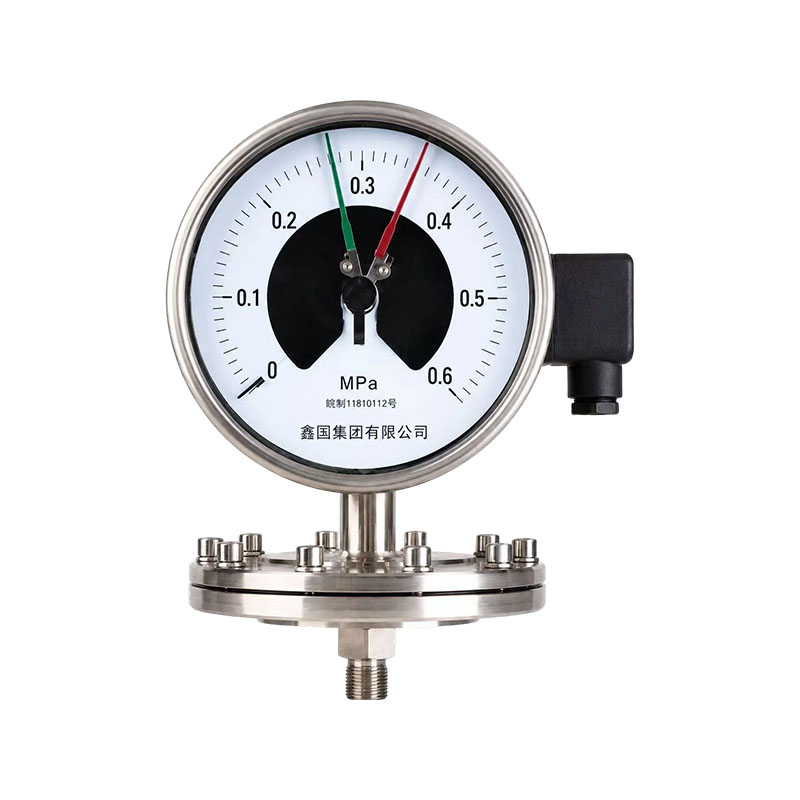

Q1: Are diaphragm pressure gauges and diaphragm pressure gauges the same thing?
A: No, they're not. The diaphragm of a pressure gauge is itself a pressure-sensing element, and the medium directly acts on the diaphragm. The diaphragm of the diaphragm pressure gauge is only used for isolation and relies on isolation fluid to transmit pressure. The membrane surface has a simpler structure and is suitable for low-pressure and anti-blocking conditions, but not for extremely high corrosion conditions.
Q2: Is a diaphragm pressure gauge suitable for measuring high pressure?
A: Not suitable, mainly used for low-pressure and low-pressure conditions. Spring tube pressure gauges are preferred for high-pressure scenarios, as exceeding the range can cause permanent deformation of the diaphragm, resulting in inaccurate measurements.
Q3: Is it easy to damage the membrane with particles in the medium?
A: Under normal working conditions, it is not easy to block, but long-term erosion from hard and sharp particles can wear down the membrane. For working conditions with more particles, it is recommended to use thickened or anti-corrosion-coated membranes to avoid direct impact of sharp materials on the membrane surface.
Q4: What are the common faults of diaphragm pressure gauges?
A: Mainly due to membrane deformation, zero offset, and pointer immobility. Mostly caused by overpressure, medium corrosion, and particle erosion. Do not use beyond the range; choose the correct membrane material for corrosive media; conduct regular calibration to ensure measurement accuracy.