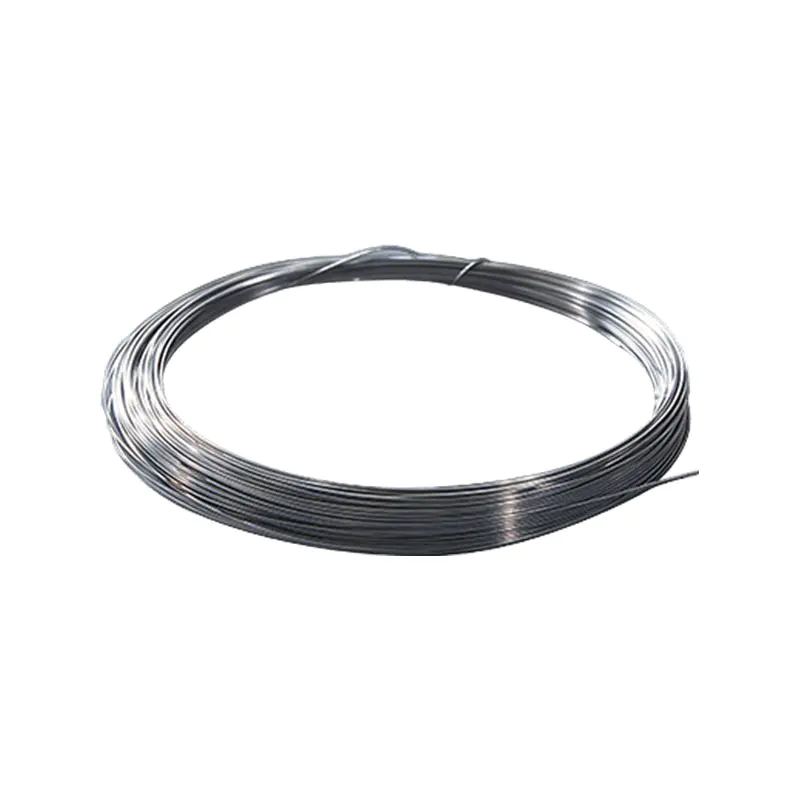
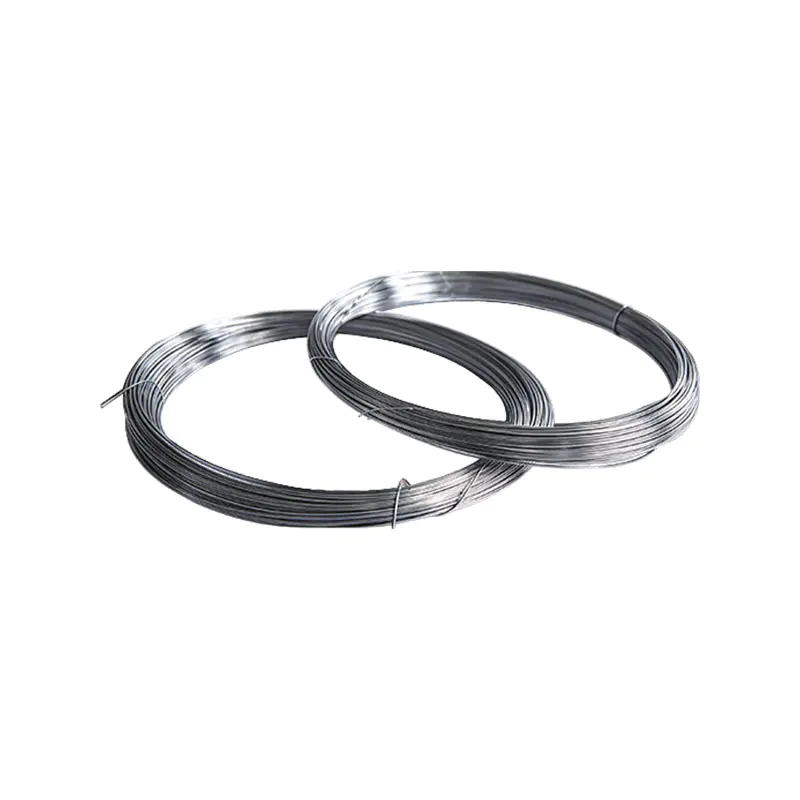
Product Introduction:
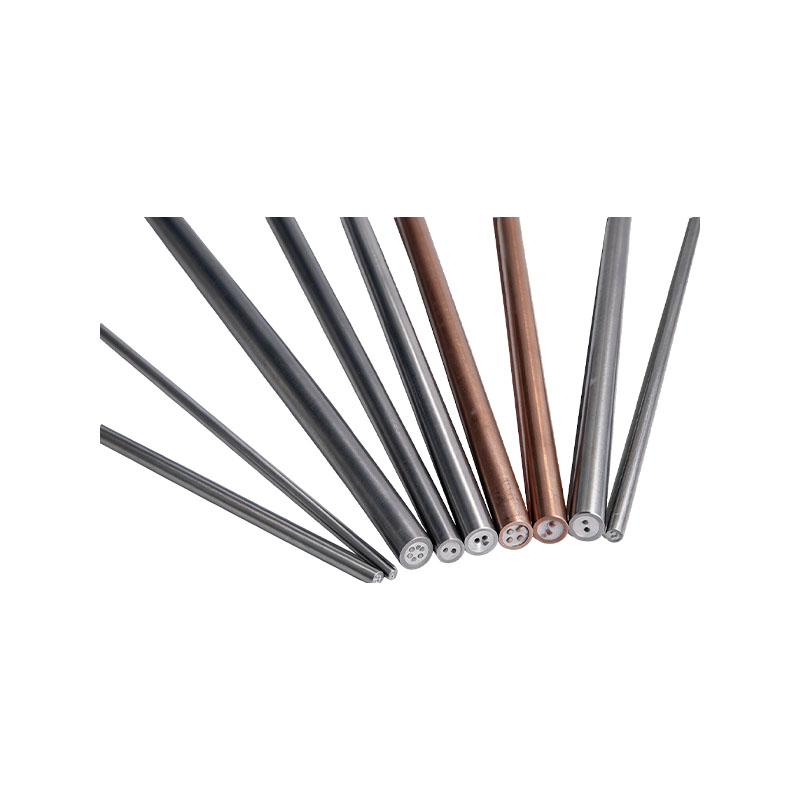
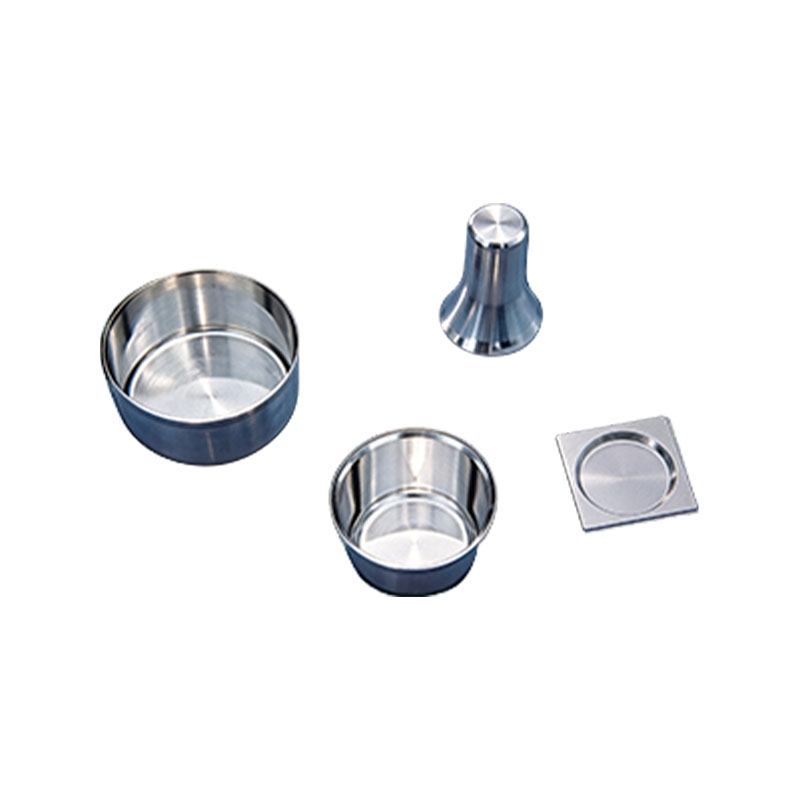
Instrument materials are metal, non-metal, and alloy composite materials used in industrial automation instruments, sensors, detection and analysis instruments, with specific properties such as thermoelectricity, elasticity, resistance, corrosion resistance, insulation, and sealing. They are used to make sensitive components, liquid components, structural shells, electrical connections, and sealed packaging parts of instruments, meeting the reliable measurement and operation requirements of instruments under high temperature, high pressure, corrosion, vibration, and other industrial conditions.
Production principle:
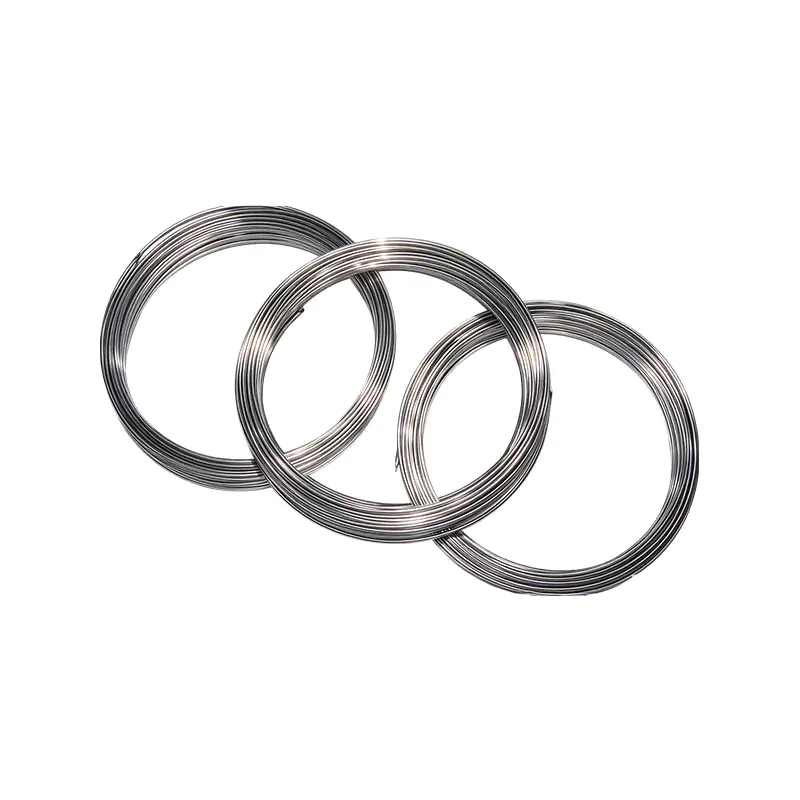
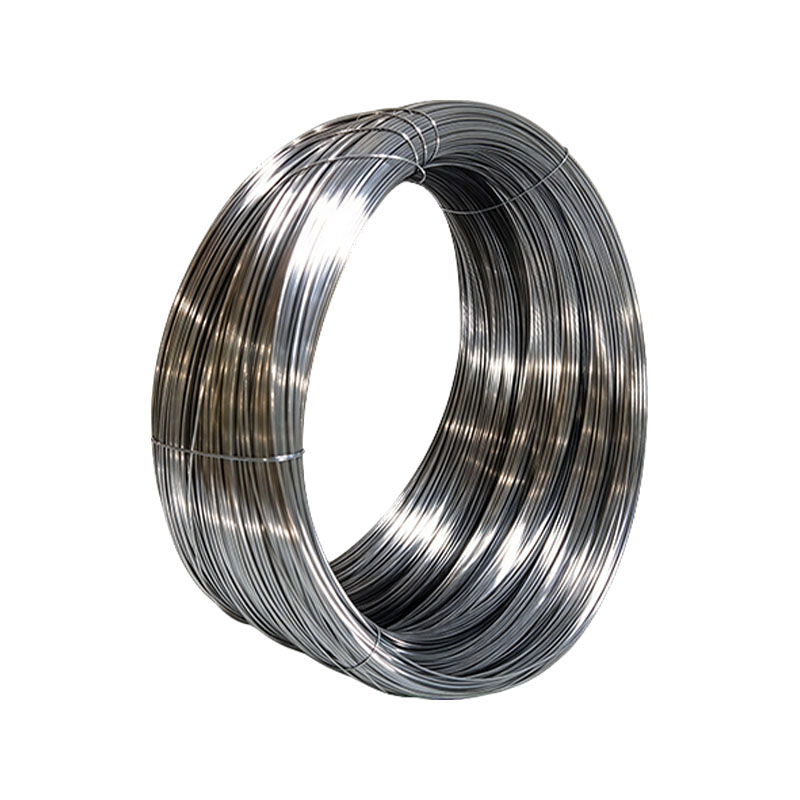
Instrument alloy materials are made from high-purity metals as raw materials, melted into ingots according to ratios, and formed through plastic processing such as hot forging, rolling, and drawing. The metallographic structure is then controlled through heat treatment to stabilize key physical properties such as resistivity, elasticity, and thermoelectric properties. Finally, they are processed into finished products such as wires and strips, meeting the requirements for instrument component use.
Product advantages:
1. Stable performance and reliable measurement accuracy
The alloy composition is uniform, with good consistency in physical parameters such as resistance, thermoelectricity, and elasticity. It has small temperature drift and high reproducibility, ensuring long-term accurate measurement of instruments and reducing signal drift and measurement errors.
2. Strong adaptability to working conditions and resistance to environmental wear and tear
It has excellent corrosion resistance, vibration resistance, and high and low-temperature resistance, and can be adapted to complex industrial sites such as chemical, metallurgical, and marine industries. The liquid-receiving components are resistant to medium erosion and delay material aging and failure.
3. Excellent processing and welding performance
The material has good plasticity and is easy to draw, punch, cut, and weld into forms. It can be processed into various precision components such as wire, strip, and sheet, meeting the manufacturing requirements of sensors, transmitters, pressure gauges, and other components.
4. Complete specifications and customizable matching
Covering multiple categories of functional alloys and structural materials, supporting customized sizes and special properties, able to match different instrument design schemes, providing complete material certification, and facilitating downstream instrument manufacturers to select and match.
Product Applications:
1. Pressure and differential pressure instruments
Used for pressure gauges, pressure/differential pressure transmitters, making elastic diaphragms, spring tubes, liquid connectors, and other components to meet pressure signal acquisition under high-pressure and corrosion conditions, ensuring instrument sensitivity and service life.
2. Temperature measuring instruments
Applied to thermocouples, thermistors, and bimetallic thermometers, producing temperature measuring alloy wires, compensation wires, and sensitive components to achieve precise detection and signal output of high and low temperatures in industrial sites.
3. Precision sensors and electrical components
Manufacturing precision resistors, splitters, and sensing sensitive cores, using materials such as constantan, manganese copper, and nickel-based alloys for signal conversion and current sampling, and adapting to various industrial sensors to ensure stable and reliable output signals.
4. Industrial process flow, liquid level, and analytical instruments
Provide liquid receiving components, conductive and structural parts for flow meters, level gauges, and analytical instruments, widely supporting automation control systems for chemical, power, metallurgical, and water treatment industries, to achieve continuous monitoring of process parameters.
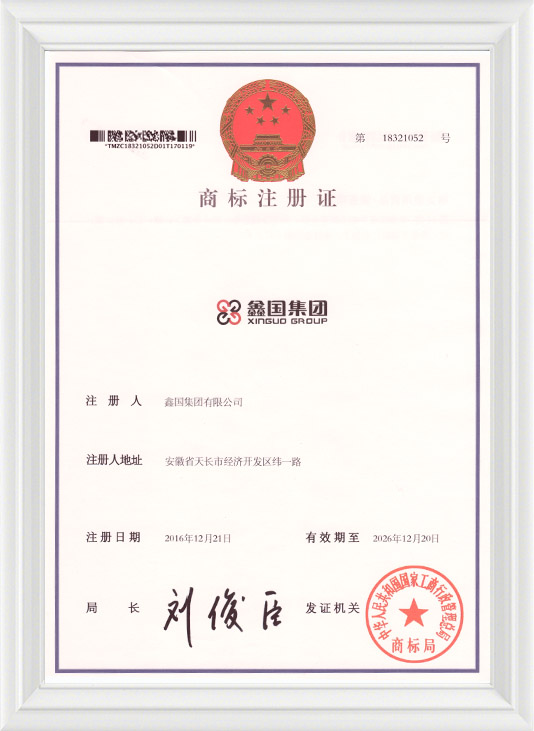
Founded in
Cover an area of
Experienced employees
Building area
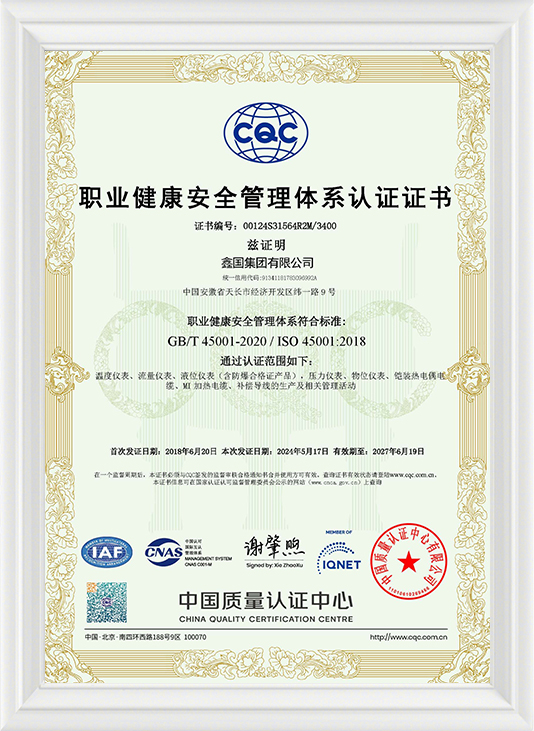

A heat-treatment line that replaced its protection tubes every six weeks did not have a thermocouple problem. It had a ceramic problem. The elements came out of service clean and unbroken, yet the tubes had cracked, spalled or bowed, and the drift that followed belonged to the t...

The first sign that something is wrong with a thin film RTD is rarely a dramatic failure. It is a slow disagreement with a neighbouring sensor, a reading that creeps during a heat-up cycle, or a batch trend that no longer matches the recipe. In one case, a food processor replace...
A dairy processor in eastern China spent three weeks chasing a pasteurizer fault that turned out to be one crossed thermocouple extension wire inside a junction box. The recorder kept writing believable numbers the whole time, which is precisely why the investigation took so lon...
A heat-treat line running at 900 degrees Celsius will usually consume a Type K thermocouple in eight to fourteen months. The same probe sitting in a clean water loop at 90 degrees Celsius often survives eight years or more. Nothing about the two probes looks different on a datas...
Instrument materials are the metals and alloys that sit at the heart of every temperature, pressure, level and flow instrument, even though most people never see them directly. A sensor or transmitter looks simple from the outside, but the wire, strip or diaphragm inside it is what actually senses the change in heat, force or level and turns that change into a usable signal. Because of this, the performance of the finished instrument depends heavily on the quality of the raw material used to build it. This page walks through what instrument materials are, the main types available, where each one is typically used, and the practical points worth thinking about when choosing a material for a sensor or instrument project.
Instrument materials are the specialized metals, alloys and functional wires used to make the sensing and structural parts found inside measurement and control instruments. Unlike ordinary industrial metal, these materials have to satisfy electrical, thermal and mechanical needs at the same time. A thermocouple wire, for instance, needs to produce a small, repeatable voltage as temperature changes, while a diaphragm used inside a pressure gauge needs to flex back and forth for years without cracking. Instrument materials are considered a foundational input for the wider instrumentation industry, because the accuracy, response speed and working life of a finished sensor largely come down to the material sitting at its core. This category covers thermocouple alloy wire, compensation cable, precision resistance alloy, heating resistance alloy, pure nickel wire and corrosion-resistant nickel-copper alloy, and each of these is chosen based on the working conditions the finished instrument will actually face.
Although each alloy family in this category serves a different job, most instrument materials share a similar set of performance traits. These are the properties that allow an instrument to keep reading correctly after months or years of continuous use, rather than drifting off or failing early.
The instrument materials category is really a family of different alloys, and each one is built for a different sensing job. Knowing the basic differences helps a buyer pick the right material for a given instrument instead of defaulting to whatever is most familiar.
Thermocouple alloy wires (K, N, E, J, T types) are pairs of dissimilar metal wires that create a small, temperature-related voltage where the two wires are joined. Type K wire, made from a nickel-chromium and nickel-aluminum pair, is popular because it covers a wide temperature range at a workable cost, while Type N uses a more oxidation-resistant composition that tends to hold up better over long periods at high temperature. Type E gives a stronger voltage signal for each degree of temperature change, which is useful in electrically noisy environments, and Type T is often chosen for cryogenic and sub-zero readings because it performs well at very low temperatures. Type J is still common in older equipment and general furnace monitoring.
Thermocouple compensation alloy wires (KX, EX, NX, JX, TX, KCA, KCB, NC, SC) carry the thermocouple signal from the sensor tip back to the display or control instrument without introducing meaningful error. These compensating wires are made to closely follow the thermoelectric behavior of their matching thermocouple type over a moderate temperature range, so the costlier sensing alloy does not have to run the whole cable distance.
High-resistance heating alloys and precision resistance alloys do a different job. Instead of generating a signal, they turn electrical energy into heat in a controlled way, or provide a fixed and stable resistance value used inside shunts, standard resistors and calibration devices. Manganese-copper based precision resistance alloys are known for a near-zero temperature coefficient of resistance, meaning the resistance value barely moves even when ambient temperature changes around it.
Pure nickel wires offer consistent purity and predictable electrical behavior, which makes them useful as a base conductor in resistance temperature sensors and certain heating elements. Monel and other nickel-copper alloys bring strong corrosion resistance to the category and are frequently used in marine, seawater and chemically demanding environments, particularly for pressure and level instrument parts that touch the process fluid directly. As a manufacturer working in the instrument materials field, Xinguo Group Co., Ltd. produces this range of thermocouple alloys, compensation wires, precision resistance alloys and nickel-copper alloys for customers across the instrumentation supply chain.
One of the easiest ways to compare instrument material types is by looking at the temperature range each one can handle while still giving a usable reading. Picking an alloy rated below the real process temperature will shorten its working life and hurt accuracy, while picking a much higher-rated alloy than necessary usually just adds unnecessary cost. The chart below lines up five common thermocouple alloy families side by side so the differences are easy to see at a glance. Type T sits at the low end and is generally kept for cryogenic and below-zero measurement work. Type J and Type K sit in the middle and, together, cover most everyday industrial temperature monitoring, including ovens, boilers and general machinery. Type N reaches a bit further than Type K while offering steadier behavior at sustained high temperature. Platinum-rhodium wire sits well above the base-metal types and is mainly reserved for furnace, glass-melting and metallurgical work where the heat is extreme.
Looking at the bars from top to bottom, the gap between alloy families becomes much easier to picture than it would be from numbers alone. Type T wire, shown at the top of the chart, is generally used where accuracy below zero matters more than heat resistance, such as refrigeration and cold-chain monitoring. Type J and Type K sit in the middle of the chart and, between the two of them, cover the largest share of everyday industrial temperature work, from drying ovens to combustion equipment. Type N is drawn slightly ahead of Type K, which reflects its improved oxidation resistance at sustained high temperature rather than a dramatically wider range. The platinum-rhodium bar reaches well past the base-metal alloys, which explains why this material is treated separately and reserved for the toughest thermal environments such as glass and metallurgical furnaces. Matching the alloy family to the real process temperature, instead of assuming a higher-rated wire is automatically the safer pick, tends to support both accuracy and reasonable long-term cost. Instrument designers usually build in a moderate safety margin above the expected peak temperature rather than choosing an alloy rated far beyond what is actually needed, since some alloy properties, including signal linearity, can shift when a material runs well below its rated ceiling for long periods. This chart is meant as a general engineering reference rather than a firm specification for any one project, and actual material selection should also take into account atmosphere, contamination risk and how often the temperature cycles up and down. Readers comparing several alloy options for a new instrument design may find it useful to keep this chart next to the process data sheet while narrowing down candidates. Overall, the visual makes clear that no single alloy family is meant to cover every temperature range on its own.
Temperature range alone does not tell the whole story about how a material behaves over its working life. A second factor worth understanding is how much a material's electrical output drifts after long exposure to heat, oxidation and repeated thermal cycling. This matters a great deal for thermocouple alloys, since even a small shift in the thermoelectric voltage shows up directly as a reading error at the display. The line chart below offers a simplified, illustrative look at how Type K and Type N wire tend to behave over thousands of hours of continuous high-temperature service. Both lines start close together because a freshly installed sensor of either type usually reads accurately, but the two lines gradually separate as operating hours build up.
As the chart shows, both alloy lines begin at roughly the same point, which reflects the fact that a newly installed sensor of either type should read close to correctly. As operating hours build up, the Type K line rises more steeply, standing in for a somewhat greater tendency toward gradual signal drift under sustained high-temperature, oxidizing conditions. The Type N line rises more gently, which lines up with the alloy's better resistance to the oxidation processes that are largely responsible for long-term thermocouple drift. This does not mean Type K wire performs poorly; it remains one of the most widely used thermocouple alloys around and works reliably within its rated conditions. Instead, the chart illustrates a practical trade-off that engineers weigh during material selection: installations with infrequent recalibration, continuous high-temperature exposure or tight accuracy requirements may lean toward the steadier behavior of Type N, while installations with regular maintenance access, moderate temperatures or lower duty cycles can rely comfortably on Type K. Choosing between these two alloy families generally comes down to balancing recalibration frequency, process importance and installation cost, and this chart is meant to support that decision rather than declare one alloy better than the other in every case. Instrument designers usually pair this kind of stability information with the temperature range data from the previous section to arrive at a well-rounded material choice for a specific project. For readers new to thermocouple selection, the simplest takeaway is that both alloy types are proven, and the right choice depends more on the operating pattern than on either alloy being inherently superior. Facilities running continuous three-shift operations with limited shutdown windows for recalibration tend to place more weight on drift performance than facilities that stop production regularly for maintenance.
Instrument materials are not tied to a single industry; they support measurement and control work across a wide span of the industrial economy. The column chart below offers a general, illustrative application intensity index for six major sectors, scored on a simple relative scale rather than an exact market figure, so readers can get a feel for where these materials tend to see the heaviest use. Industrial automation and process instrumentation sits at the top because nearly every automated production line depends on temperature, pressure, level or flow sensing at multiple points along the way. Petrochemical and metallurgical processing follows closely behind, which fits with the harsh, hot and often corrosive conditions found in refineries, chemical plants and metal processing facilities.
This chart is meant to give an intuitive feel for relative demand rather than a precise statistical breakdown, since exact figures vary by region, year and specific alloy sub-type. Industrial automation leads the chart because temperature and pressure sensors sit throughout nearly every stage of a modern production line, from raw material handling to final quality checks. Petrochemical and metallurgical facilities rank close behind, reflecting the mix of high temperature, corrosive atmosphere and continuous operation that these environments demand, all of which place real performance requirements on the materials used inside their sensors. Power generation facilities, including thermal and renewable energy plants, depend on accurate temperature and flow instrumentation to protect equipment and keep operations efficient, which keeps this sector in the upper half of the chart. Automotive, rail, aerospace and medical applications sit lower on the chart, not because they are unimportant, but because each unit produced typically needs a smaller total volume of specialized material. Even sectors positioned lower on this index often carry demanding precision requirements, so application intensity should not be read as a measure of technical difficulty. A single aerospace sensor, for example, may call for tighter tolerances than a much larger industrial automation order. Readers should treat this chart as a general orientation tool rather than a market research figure, useful mainly for understanding where instrument materials play the most day-to-day role across industry. Sectors not shown on the chart, such as food processing and building HVAC systems, also use these materials regularly, just at a smaller relative scale than the six sectors highlighted here.
Because instrument materials need to balance several performance traits at the same time, a single number rarely captures how well a given alloy family fits a particular design. The radar chart below compares four broad material families, thermocouple alloys, precision resistance alloys, elastic diaphragm alloys and corrosion-resistant nickel-copper alloys, across five general performance areas: precision, corrosion resistance, thermal stability, elasticity and fatigue resistance, and processability. The scoring is meant as a general engineering guide based on well-known alloy behavior, not a numeric measurement from one specific test, and it is intended to help readers visualize relative strengths rather than rank one family as better overall. Reading around the shape of each line shows that no single family leads in every category, which is exactly why instrument designers keep several material types on hand instead of relying on one alloy for every component.
Thermocouple alloys, shown as the outer red shape on the temperature-related axes, score well on thermal stability and precision, which fits their core job of producing a repeatable voltage signal across a wide temperature range. Precision resistance alloys, shown in dark red, tend to score highest on precision and processability, since manganese-copper alloys and similar materials are valued for their steady resistance values and their suitability for fine-wire manufacturing used in standard resistors. Elastic diaphragm alloys score comparatively higher on elasticity and fatigue resistance, matching their role inside pressure and level sensing elements that need to flex again and again without cracking or bending out of shape. Corrosion-resistant nickel-copper alloys, including Monel-type materials, stand out most clearly on the corrosion resistance axis, which lines up with their common use in seawater, marine and chemically demanding process settings. None of the four material families leads across all five categories, and that is exactly why instrument manufacturers keep multiple alloy product lines rather than a single all-purpose material. When a project has mixed requirements, for example a pressure sensor working in a corrosive, high-vibration setting, designers often combine elements from more than one material family inside the same instrument to balance these competing demands. Reading the four shapes together also shows how trade-offs work in practice: gaining strength in one area, such as corrosion resistance, often means giving up a bit of ground in another, such as processability. This radar comparison is meant purely as an early-stage conceptual reference for engineers weighing material options, and it should be paired with detailed technical data before a final decision is made. For a first-time reader unfamiliar with alloy selection, the main lesson is simply that the "best" material always depends on what the instrument actually needs to do.
Instrument materials show up across a broad range of industries because almost every process that involves heat, pressure or flow needs some form of reliable sensing. The list below outlines the main sectors where these materials are put to work.
The highest and lowest temperature the material will see, plus whether the surrounding atmosphere is oxidizing, reducing or inert, generally sets the direction for which alloy family fits best. As shown in the temperature comparison earlier on this page, alloys such as Type T suit low-temperature work while platinum-rhodium wire is kept for the most extreme high-temperature settings.
Materials that will touch acidic, alkaline, humid or marine environments generally do better as corrosion-resistant alloys such as Monel-type nickel-copper materials, which tend to hold up far longer than standard base-metal wires under sustained chemical exposure.
Parts that flex again and again, such as diaphragms and bourdon tubes, need alloys chosen specifically for elasticity and fatigue resistance, since a material picked purely for its electrical behavior may crack early under mechanical stress.
Applications with long gaps between recalibration, or where getting to the instrument for recalibration is difficult, tend to benefit from alloys with a track record of long-term stability, following the same logic covered in the signal drift comparison earlier on this page.
| Material Family | Key Property | Typical Application | Approx. Temperature Range |
|---|---|---|---|
| Thermocouple Alloys (K, N, E, J, T) | Stable thermoelectric voltage | Furnace, oven and process temperature sensing | -200 to 1260 C |
| Compensation Wires (KX, EX, NX, JX, TX) | Matched thermoelectric behavior at moderate temperature | Signal transmission from sensor to instrument | -25 to 200 C |
| Precision Resistance Alloys | Near-zero temperature coefficient of resistance | Shunts, standard resistors, calibration devices | -50 to 150 C |
| Pure Nickel Wire | High purity, predictable electrical response | Resistance temperature sensors, heating elements | -50 to 300 C |
| Monel / Nickel-Copper Alloys | Strong corrosion resistance | Marine, chemical and pressure/level components | -30 to 480 C |
| Platinum-Rhodium Wire | Extreme high-temperature capability | Furnace, glass melting and metallurgical sensing | Up to 1600 C |
This table brings the six material families together in one place so a reader can scan for the property that matters most to their project, whether that is temperature range, corrosion resistance or signal stability, without having to page back through the earlier sections. Used alongside the charts above, it can serve as a quick starting checklist before moving into a more detailed technical review with an instrument or material supplier.
In boiler and combustion monitoring, Type K or Type N thermocouple alloy wire is commonly installed to track flue gas and furnace wall temperature, feeding data back to control systems that manage fuel input and combustion efficiency. In glass melting furnaces and other extreme-heat metallurgical processes, platinum-rhodium thermocouple wire is used because base-metal alloys would oxidize or soften under sustained exposure to temperatures well above 1200 degrees Celsius. In offshore and marine pressure gauges, Monel-type diaphragm and wetted-part materials are chosen specifically because seawater and salt-laden air would corrode a standard steel or copper alloy component much more quickly. In calibration laboratories, manganese-copper based resistance alloys are used to build standard resistors whose value needs to stay essentially unchanged across a wide ambient temperature swing, since even a small resistance shift can throw off the accuracy of every instrument calibrated against it. Compensation cable, built from KX, NX or similar matched alloy wire, is routinely run between a thermocouple sensor located deep inside a process vessel and a control room instrument some distance away, keeping signal accuracy intact without requiring the full run to use costly noble-metal wire.
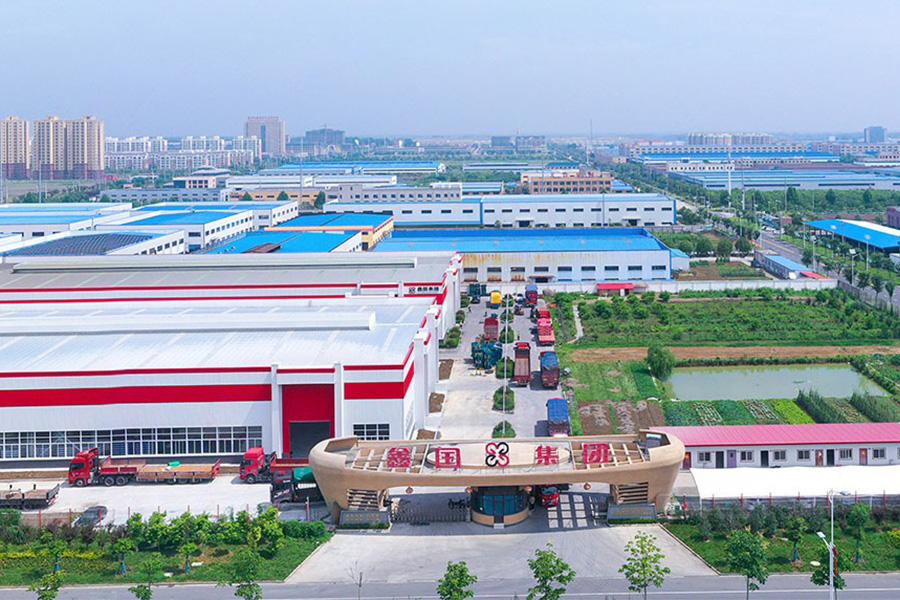
Once instrument materials are installed inside a sensor or transmitter, a few consistent maintenance habits go a long way toward keeping accuracy steady over the equipment's working life. Wiring and thermocouple junctions are worth checking periodically for physical damage, corrosion at connection points, or insulation breakdown, especially in installations exposed to vibration or thermal cycling. Instruments running near the top of their rated temperature range should generally be scheduled for more frequent recalibration than those running well within their rated range, since alloy drift tends to speed up at sustained high temperature. Compensation cable runs are also worth checking to confirm that the correct matched alloy type has been used along the full length, since mixing in an incompatible wire type introduces a measurement error that can be hard to trace later on. During manufacturing, alloy wire needs to be drawn, annealed and inspected under controlled conditions so that grain structure and electrical properties stay consistent along the entire length. Xinguo Group Co., Ltd. applies this kind of controlled production process across its thermocouple alloy, compensation wire and precision resistance alloy product lines, working alongside instrument makers who need dependable raw material quality for large or long-running instrumentation projects. Founded in 1997 and based in Tianchang City, Anhui Province, Xinguo Group Co., Ltd. has grown over the years into a broader operation that covers instruments, cables, alloy materials and precious metals, backed by a technical team of engineers and assistant engineers who support product development and quality control. This combination of manufacturing scale and in-house technical staff is part of what allows the company to keep material specifications consistent across large or multi-phase instrumentation projects.
A thermocouple alloy sits directly at the sensing junction where temperature is measured, while a compensation alloy carries that signal back to the instrument over a moderate temperature range so the whole cable run does not need to use the more costly sensing-grade wire.
Type N alloy has a composition that resists the internal oxidation processes behind gradual thermoelectric drift somewhat more effectively than Type K, which makes it a common choice for long-duration, high-temperature installations where recalibration access is limited.
Corrosion-resistant nickel-copper alloys are generally the better fit whenever an instrument part will contact seawater, humid marine air or aggressive chemical process fluids, since standard alloys tend to degrade noticeably faster under these conditions.
Precision resistance alloys are engineered with a near-zero temperature coefficient of resistance, meaning their resistance value stays close to constant despite ambient temperature changes, which matters for calibration standards and measurement shunts.
Yes, alloy wire diameter, temper, insulation type and packaging format can typically be adjusted to fit a specific instrument design, and Xinguo Group Co., Ltd. works directly with instrument makers to match material specifications to individual project needs.
Inspection frequency depends on operating temperature, vibration exposure and process importance, but as a general practice, components running near their rated temperature limit or in corrosive environments benefit from more frequent checks than those operating well within normal conditions.



 INQUIRY
 English
 عربى
عربى русский
 中文简体
中文简体