+86-0550-7623999
 INQUIRY
en
INQUIRY
A heat-treatment line that replaced its protection tubes every six weeks did not have a thermocouple problem. It had a ceramic problem. The elements came out of service clean and unbroken, yet the tubes had cracked, spalled or bowed, and the drift that followed belonged to the tube, not the sensor.
Ceramic thermocouple protection tubes sit between a working sensor and everything a process can throw at it: radiant heat past 1,300 °C, carburizing gas, sulphur-bearing flue gas, molten metal splash, vibration and relentless thermal cycling. They are consumables, often the cheapest item in the measurement loop, but they decide whether that loop survives a campaign or a quarter.
The short version before the detail: match the ceramic grade to the peak temperature and the chemistry of the atmosphere, size the bore so the element can still be pulled out after a year in service, and buy from a manufacturer who can document the material rather than a trader who can only quote a dimension. Thread, flange, wall thickness and delivery time all follow from those three decisions.
A bare thermocouple or RTD element is a fragile thing. A mineral-insulated sheath may be only 3 mm to 8 mm across, and the wires inside are thinner than a human hair. Without a tube around it, that element has to survive impact from falling feedstock, erosion from fly ash, chemical attack from process gas and electrical contact with grounded metalwork. Any one of those will end the measurement.
The tube solves four problems at once. It takes the mechanical punishment. It isolates the element from corrosive or conductive media. It provides the insulating path that keeps the measuring circuit from grounding against the vessel wall. And it sets the immersion depth, which is what actually determines whether the sensor reads the process or just reads the furnace wall.
There is a cost to all this protection. Every millimetre of ceramic wall adds thermal mass and thermal resistance between the hot junction and the process. A thin closed-end tube in good contact with the medium responds in tens of seconds; a heavy, thick-walled tube in a low-velocity gas stream can lag by several minutes. On a control loop that is chasing a fast exotherm, that lag is not a detail, it is a tuning problem. Buyers who complain that a new sensor "reads slowly" are often describing the tube they specified, not the element they bought.
Electrical behaviour also changes with temperature. Alumina and most oxide ceramics insulate extremely well when cold, but their resistivity falls as temperature climbs. In very hot service, insulation resistance can drop to a level that upsets sensitive transmitters, which is one reason high-temperature installations sometimes move to non-oxide ceramics or accept a shorter replacement cycle.
The protection tube is a wear part that sets both the accuracy and the service life of the whole measurement loop, so it deserves the same engineering attention as the sensor itself.
Most quotations for ceramic thermocouple protection tubes come back with one of five or six material names, and the difference between them is not cosmetic. Alumina, mullite, silicon carbide, silicon nitride, zirconia and fused silica each have a range where they perform well and a range where they fail early.
Dense 99% alumina is the default for clean, high-temperature service. It holds shape to roughly 1,600 °C in air, insulates well, resists many oxidizing atmospheres and is widely available in standard bores and lengths. Its weakness is thermal shock: heat it too quickly or quench it with condensate and it will crack. Mullite and corundum-mullite tubes trade a little of that peak temperature for noticeably better cycling tolerance, which is why they are common on kiln and heat-treatment applications where the door opens and closes all day.
Silicon carbide brings high thermal conductivity and excellent thermal shock resistance, so it survives rapid cycling and heavy erosion. It is a strong candidate for immersion in molten non-ferrous metals, though it needs care in strongly oxidizing conditions at the top of its range and it can be attacked by certain slags. Silicon nitride offers similar shock resistance with good strength and is often chosen for aluminium and other foundry melts where oxide ceramics are wetted and dissolved.
Zirconia tolerates the highest temperatures of the group and is chemically stubborn in many melts, but it is heavier, more expensive and comparatively sensitive to fast cooling. Fused silica sits at the other end: modest temperature ceiling, outstanding resistance to quenching. If a process cycles violently below about 1,100 °C, a fused silica tube may outlast a premium alumina tube by a wide margin.
| Grade | Max continuous use in air | Thermal shock | Typical service | Relative cost |
|---|---|---|---|---|
| 99% alumina | About 1,600 °C | Moderate to low | Clean oxidizing kilns, furnaces, flue gas | Low |
| Mullite / corundum-mullite | About 1,450 °C | Good | Cycling kilns, heat treatment, ceramics | Low |
| Silicon carbide | About 1,500 °C | Excellent | Molten non-ferrous metals, erosion, fast cycling | Medium to high |
| Silicon nitride | About 1,400 °C | Excellent | Aluminium and foundry melts, wear environments | High |
| Zirconia | About 1,800 °C | Moderate | Very high temperature, aggressive melts | High |
| Fused silica | About 1,100 °C | Excellent | Rapid quenching, condensate, laboratory work | Medium |
Grade selection should be driven by the failure mode you have actually seen, not by the highest temperature number on a datasheet.
The temperature figure on a ceramic tube datasheet usually describes one specific situation: continuous service in clean air, with no thermal cycling, no contamination and modest mechanical load. Few real processes match that description. The chart below sets out how the common grades compare on that clean-air basis, which is a sensible starting point before the process conditions are applied.
Typical maximum continuous service temperature in air (°C)
Read the bars as a ranking, not as a promise. A tube quoted at 1,600 °C in clean air may be limited to roughly 1,400 °C once the atmosphere is reducing, dusty or chemically active, and the derating is often larger than the gap between two grades. Buyers who compare suppliers purely on the headline temperature number end up choosing between grades that behave almost identically in their process, while missing the property that actually matters, such as shock resistance or resistance to a specific melt.
This is where the material chain behind the tube becomes useful. A supplier that also produces thermocouple alloy wire and instrument materials understands how the hot junction, the insulation and the sheath behave as one system at temperature, and can advise on the tube and the element together rather than quoting a tube in isolation. Practical experience with RTD assemblies such as anti-corrosion and abrasion-resistant types also helps, because the same ceramic that protects a thermocouple usually protects the resistance element in the same port.
Treat the published temperature limit as a starting point for clean air, then derate it for cycling, contamination and mechanical load before you commit to a grade.
Temperature is the easy part of the specification. Chemistry is where most premature failures hide, because the damage rarely looks dramatic. A tube does not usually disappear; it develops a glazed, pitted or spalled surface, loses wall thickness on one side, then cracks when the section becomes too thin to carry the load.
Oxide ceramics such as alumina and mullite handle oxidizing atmospheres well. They are much less comfortable with reducing conditions, with alkali-rich vapours and with fluorine compounds. In glass and cement plants, alkalis carried by dust and volatiles can attack the surface of an alumina tube even when the temperature is well inside the quoted range. Hydrogen-rich and carbon-rich atmospheres can also shorten life by changing how the surface behaves over time.
Silicon carbide has its own sensitivities. It performs well in many aggressive environments, but it can be attacked by certain molten metals, slags and oxide melts, and it behaves differently in high-oxygen service at the top of its range. Silicon nitride is often the better foundry choice for aluminium. Zirconia resists a wide range of melts but is not universally inert, and it is vulnerable to certain slags and to severe thermal gradients.
A practical test is worth more than a datasheet comparison. If a plant has one port that eats tubes, installing a short trial of two or three candidate grades side by side for a few weeks will usually settle the question faster than any table.
Specify the ceramic against the worst local chemistry the tube will see, not the average composition of the process gas.
Many cracked tubes are blamed on a bad batch when the real cause is the way the vessel was started. Ceramic is brittle, and its tolerance for rapid temperature change varies enormously between grades. A tube that lives happily at 1,400 °C for months can split the first time it meets a cold draught from an open door or a spray of condensate.
Three factors decide how much shock a tube can absorb: the material, the wall thickness and the support arrangement. Thin walls cool and heat more evenly, so they resist shock better than heavy sections of the same grade. Long unsupported spans bend under their own weight at temperature and fail at a stress point rather than in the middle. A closed-end tube with an internal support, or a two-piece design, often lasts longer than a longer single-piece tube in the same port.
Rules that hold up in practice include warming the vessel gradually rather than at full firing rate, keeping condensate away from hot ceramic, and avoiding water sprays on a tube that is still above a few hundred degrees. Where the process cannot be controlled that carefully, fused silica or a non-oxide ceramic is often the more realistic answer, even at a lower temperature ceiling.
Where the process cycles hard, choose a shock-tolerant grade and a thinner wall instead of chasing a higher temperature rating.
Once the material is settled, geometry decides whether the installation works. The most common specification mistakes are a bore that is too tight, an immersion length chosen by guesswork, and a thread that does not match the existing port. Working through the points below in order avoids most of them.
Two further points cause trouble on site. First, ceramics are usually supplied in the fired size, so grinding to a final dimension is limited and threading is often done on a metallic or cermet insert rather than into the ceramic itself. Second, a tube that runs close to a wall or a burner will develop a hot side and a cold side, which is a bending load at temperature; adding a support or rotating the port can add months of life.
Write the bore, wall thickness, immersion depth, overall length and thread as five separate numbers, because suppliers will quote exactly what you give them.
The end form changes how the tube behaves more than most buyers expect. An open-end tube is a simple hollow cylinder, often used with a separate closed tip or with a metal thermowell behind it. It is cheap, easy to make in long lengths and simple to inspect, but the element is exposed to whatever enters the open end, so it suits clean, dry, non-corrosive service.
A closed-end tube seals the element completely. It is the standard answer for liquids, molten metals, dust-laden gas and any application where contamination or moisture would destroy the element. The cost is thermal lag: the closed tip adds mass between the process and the hot junction, and the thicker the tip, the longer the response time.
Two-piece designs separate the tip from the shank. That lets a plant replace only the part that actually wears, which is often the last 200 mm, and it lets the shank be a shock-tolerant grade while the tip is chosen for chemical resistance. Where the same port consumes full-length tubes on a short cycle, the two-piece route can reduce both cost and downtime. It is worth discussing with the supplier before assuming that every replacement must be a single ceramic tube.
If only the tip wears, a two-piece tube turns a full-length consumable into a small, low-cost part.
Not every hot port needs a thermocouple. Resistance elements are often preferred where stability and repeatability matter more than raw speed, and the same ceramic protection logic applies. A resistance element in a ceramic tube gives a stable, low-drift measurement, provided the tube does not introduce electrical leakage or mechanical stress.
This is an area where it helps to buy the tube and the assembly from the same source. An assembly built around a ceramic tube can be configured for the specific problem in the port, whether that is abrasion, corrosion, a hazardous area classification, multiple measuring points, a display head or a power station duty cycle. Anti-corrosion and abrasion-resistant designs, for example, take the same ceramic selection questions and answer them together with the element and the termination.
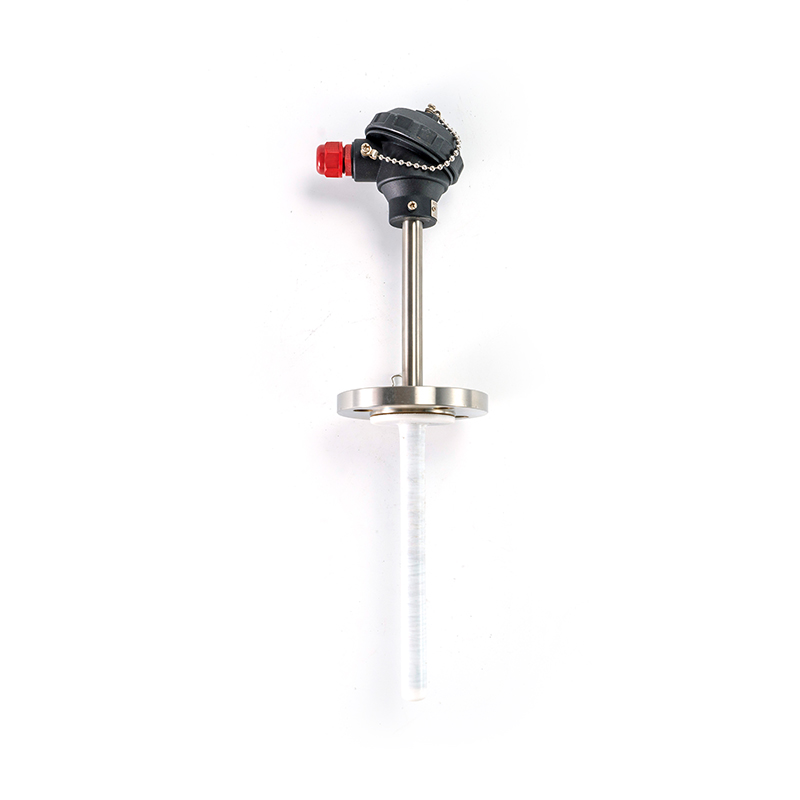 Anti-corrsive RTDWe can provide all kinds of special and general corrosion resistant materials according to the corrosive medium, diferent, especially the corrosion prevention of the c...View Product →
Buyers comparing options often find that the assembly price is dominated by the housing and the certification rather than the ceramic, which makes it sensible to specify the tube for life and the assembly for accuracy at the same time. A supplier that manufactures both parts can also confirm that the bore, thread and insertion depth are consistent before anything is shipped.
Specify the ceramic and the sensing element together so that one party owns the fit, the response time and the replacement cycle.
A tube can only protect what sits inside it, and what sits inside is a pair of dissimilar conductors. The wire grade determines the temperature range, the output curve and the drift behaviour, while the tube determines how long that wire survives the environment. Treating the two as separate purchases is how plants end up with a perfectly good ceramic around an element that was never suited to the temperature.
Common pairings behave quite differently. Nickel-chromium and nickel-silicon combinations cover the widest general range of industrial furnaces and kilns. Iron and constantan types suit lower temperatures and reducing conditions. Copper and constantan types are used where the range is modest but accuracy matters. Each has a recommended ceiling, and each has atmospheres it tolerates better than others, which is why the material advice for the tube and for the wire should come from the same technical source.
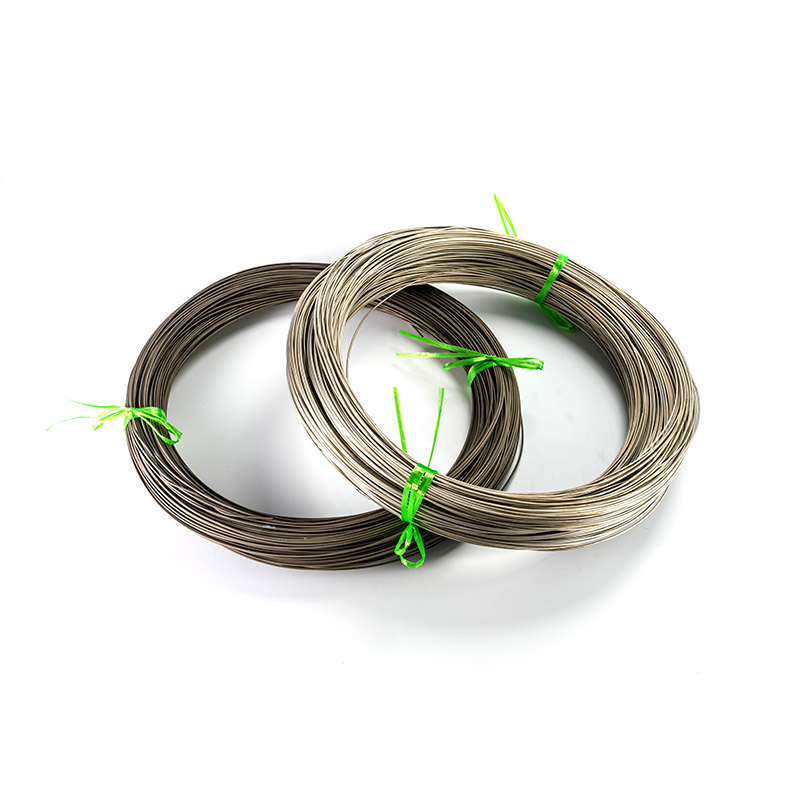 Thermocouple alloy wireProduct Introduction Thermocouple alloy wire is a precision temperature‑measuring alloy wire mainly composed of nickel, chromium, silicon, copper and other metals. Con...View Product →
It is also worth asking whether the wire and the tube come from a plant that controls its own alloy melting, drawing and annealing. Consistency in the alloy is what keeps the output curve stable from one batch to the next, and that consistency shows up in the field as readings that match between ports rather than drifting apart over a campaign.
The most expensive tube cannot rescue an element whose alloy grade was chosen for the wrong temperature range.
A thermocouple circuit is only as good as its coldest section. From the terminal head back to the instrument, the signal travels through extension or compensating wire that must match the element's alloy family and respect polarity. Reverse the pair, or use the wrong alloy, and the reading will be wrong by a margin that grows with the temperature difference between the head and the cabinet.
Two issues dominate field problems. The first is the terminal head temperature: if the head sits in a hot location and no reference compensation is applied, the cold junction error can be substantial. The second is electrical noise, which matters increasingly as plants add variable-frequency drives. Screened construction with a single, consistent ground reference is usually the answer, and it should be chosen at the same time as the tube and the element rather than patched afterwards.
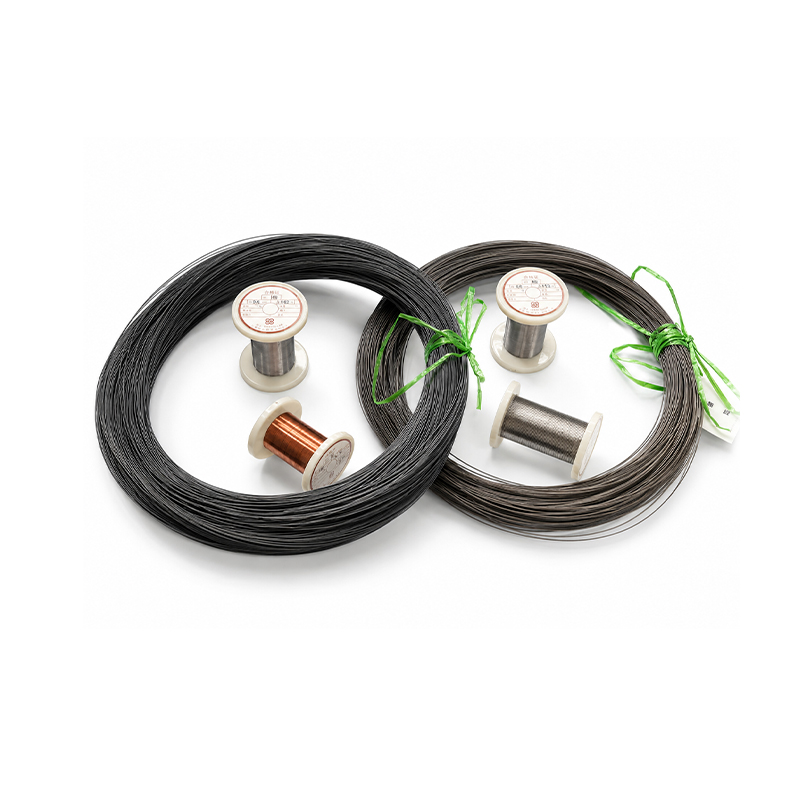 Thermocouple compensating wire alloy wireProduct Introduction Alloy wire for thermocouple compensating cables is a core conductive material for industrial temperature measurement systems, used as the alloy co...View Product →
Purchasing the wire from the same manufacturer as the alloy wire used in the element also removes a common source of mismatch. When both come from one melting and drawing operation, the pair characteristics line up, and the installation is easier to validate at commissioning.
Budget for the wire, the head and the grounding detail at the same time as the ceramic tube, because they all contribute to the same error.
Most quotation delays are caused by incomplete enquiries, not by slow factories. A clear RFQ usually comes back with a usable price and a realistic lead time in a couple of days. Working through the following list before sending an enquiry avoids the second and third round of questions.
Including the failure history is the single most useful thing a buyer can add. A supplier who knows that tubes fail after five weeks in a cycling kiln will suggest a shock-tolerant grade or a thinner wall, whereas a supplier told only "alumina tube, 1,200 mm long" will reproduce the same problem at the same price.
Include the failure history in the enquiry; the grade recommendation depends on it far more than on the drawing.
Ceramic tubes are not expensive items, but the cost of replacing them is often dominated by everything around the purchase: the shutdown hours, the labour, the lost production while a port is out of service. That asymmetry explains why spending a little more on a grade that lasts twice as long is usually the cheaper decision.
Four factors move the unit price. Material grade is the largest, with zirconia and silicon nitride well above alumina and mullite. Size comes next, since long tubes need larger kilns and more careful handling. Dimensional precision adds cost when tight bore or straightness tolerances are required. Quantity has the most visible effect, because setting up a firing run is a fixed cost that is spread across the pieces produced.
Lead time follows the same logic. Standard sizes in common grades are frequently available from stock or on a short cycle, while special lengths, unusual threads and non-oxide grades are made to order. Buyers who keep a modest buffer of the two or three sizes used most often on site avoid the emergency air-freight order, which is where the real cost of a cracked tube shows up.
Compare the total cost of a year of service, not the invoice price of a single tube.
Three commercial models appear in most searches for this product: the manufacturer that fires and machines the ceramic, the supplier that distributes a range of instrumentation, and the wholesaler that holds stock for resale. Each has a legitimate role, and the right choice depends on whether the problem is standard or specific.
A manufacturer is the better route when the tube has to interact with a specific atmosphere, when tolerances matter, or when a plant wants technical input on why the last batch failed. A manufacturer that also produces thermocouple alloy wire, resistance elements and instrument materials can treat the tube as one part of a measurement system, which tends to produce a more coherent answer than a catalogue lookup. Volume pricing is usually stronger as well.
A supplier or wholesaler makes sense when the requirement is a standard size in a common grade and the priority is availability. The trade-off is that the technical depth behind the quotation may be limited, and questions about atmosphere or thermal shock can go unanswered. For one-off replacements on non-critical ports, that is a reasonable compromise.
Whoever is chosen, three checks are worth making. Ask for the grade in writing with a material description. Ask for the tolerances that will be held on bore and length. And ask who is responsible if the tube fails within a defined period in the specified conditions. A supplier that answers all three clearly is likely to be easier to work with when something goes wrong.
Match the supplier model to the problem: technical input from a manufacturer for difficult ports, and distribution for straightforward replacements.
Most are made from dense oxide or non-oxide ceramics: 99% alumina, mullite or corundum-mullite, silicon carbide, silicon nitride, zirconia or fused silica. The choice is driven by service temperature, atmosphere chemistry, thermal cycling and whether the tube contacts a molten metal or a flowing gas. Two tubes of identical dimensions can behave completely differently if the grade is different.
Alumina is usually the better option for clean, oxidizing, high-temperature service where electrical insulation and cost matter. Silicon carbide suits fast cycling, erosion and many molten non-ferrous metals, but it needs care in strongly oxidizing conditions and against certain slags. If the existing alumina tubes fail by cracking rather than by chemical attack, silicon carbide is worth testing. If they fail by surface glazing and thinning, the chemistry is the problem and the grade choice should follow that.
A commonly used guide is an immersion of eight to ten times the tube diameter, which places the sensing point far enough into the medium to avoid the influence of the wall and the mounting boss. That figure is a starting point rather than a rule, because available port depth, flow velocity and mechanical support also constrain the answer. The immersion depth and the overall length should always be specified as two separate numbers.
Ceramic can be threaded, but the thread is often formed on a metallic or cermet insert or bonded into a fitting, because fired ceramic does not tolerate the same machining as metal. Flanges and compression fittings are common alternatives. If the port already exists, measure the thread form and pitch before ordering, since NPT, BSP and metric threads are not interchangeable.
Raise the temperature gradually, keep condensate and cold draughts away from hot ceramic, and avoid spraying water on a tube that is still at temperature. Choose a grade with better thermal shock resistance, and consider a thinner wall with a support for long spans. Where the process cannot be controlled gently, fused silica or a non-oxide ceramic is often more realistic than a high-alumina tube.
Yes. The same tube protects a resistance element, and the selection logic is similar, with one extra consideration: at very high temperature the electrical resistivity of oxide ceramics falls, which can affect the measuring circuit. Many plants run ceramic tubes on RTD assemblies for stability, particularly where corrosion or abrasion is the dominant risk rather than speed of response.
Standard sizes in common grades are often available quickly, sometimes from stock. Special lengths, unusual connection forms and non-oxide ceramics are normally made to order and take longer. The practical answer is to ask for a firm date at the quotation stage and to keep a small buffer of the sizes used most often, rather than relying on an emergency order during a shutdown.
Most manufacturers will supply trial quantities, and it is worth doing whenever a plant is changing grade or moving to a two-piece design. Running two candidate materials side by side in the worst port for a few weeks produces more useful information than any comparison table. Include the trial results in the next enquiry so the supplier can adjust the specification.
Silicon nitride and certain silicon carbide grades are the usual candidates, because oxide ceramics tend to be wetted and attacked by aluminium melts. The decision also depends on the alloy being cast, the flux used and how long the tube stays immersed. Where possible, confirm the recommendation against the specific melt chemistry rather than a general material category.
Keep them dry, upright and away from impact. Ceramic absorbs little moisture in dense grades, but porous material and bonded joints can pick up water that flashes to steam on first heat-up. Inspect each tube for hairline cracks before installation, because a damaged tube that fails early in service is often blamed on the supplier when it was damaged in the store.
If the next step is confirming how a tube, an element and the wiring behave together, the pages below cover the technical background and the fastest route to a quotation.
Thermocouple types, structure and selection guide for industrial use
Send your drawing, grade and process conditions to our engineering team
Ceramic thermocouple protection tubes look like a simple consumable, and that is exactly why they get specified badly. The grade decides how the tube behaves in a real atmosphere; the geometry decides whether the element can be changed without a fight; the supplier decides whether anyone can explain why the last batch failed.
Get those three right and the measurement loop settles down. Readings stay consistent between ports, replacements happen on a planned schedule rather than in the middle of a shift, and the annual spend on tubes falls even when the unit price creeps up. Start with the failure history, work backwards to the material, and buy from a manufacturer who can discuss both the ceramic and what sits inside it.

A heat-treatment line that replaced its protection tubes every six weeks did not have a thermocouple problem. It had a ceramic problem. The elements came out of service clean and unbroken, yet the tubes had cracked, spalled or bowed, and the drift that followed belonged to the t...

The first sign that something is wrong with a thin film RTD is rarely a dramatic failure. It is a slow disagreement with a neighbouring sensor, a reading that creeps during a heat-up cycle, or a batch trend that no longer matches the recipe. In one case, a food processor replace...
A dairy processor in eastern China spent three weeks chasing a pasteurizer fault that turned out to be one crossed thermocouple extension wire inside a junction box. The recorder kept writing believable numbers the whole time, which is precisely why the investigation took so lon...
A heat-treat line running at 900 degrees Celsius will usually consume a Type K thermocouple in eight to fourteen months. The same probe sitting in a clean water loop at 90 degrees Celsius often survives eight years or more. Nothing about the two probes looks different on a datas...