 INQUIRY
 English
 عربى
عربى русский
 中文简体
中文简体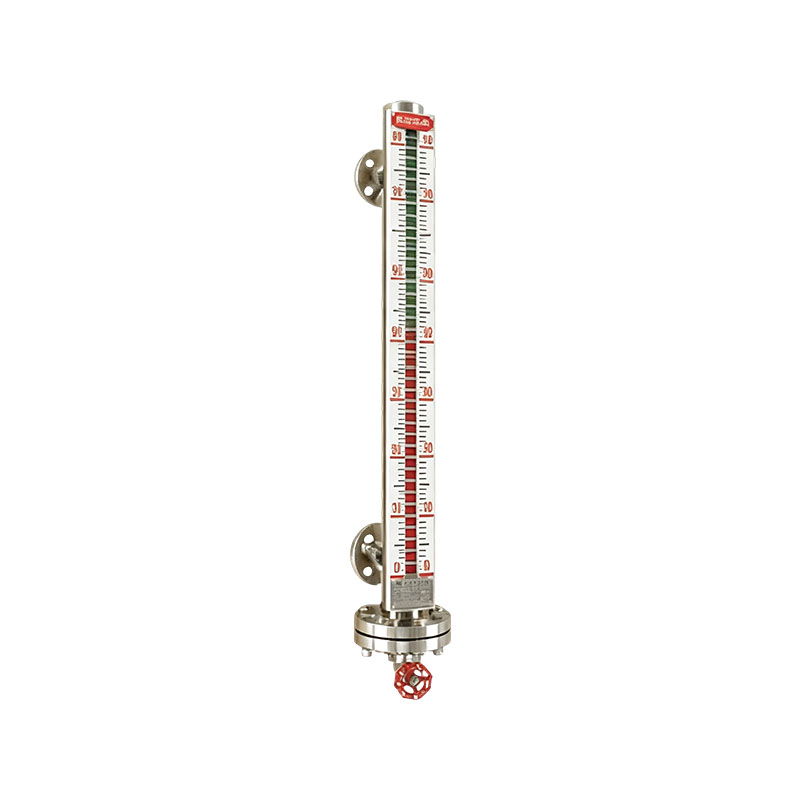

Q1: What are the minimum requirements for the medium density of a high-temperature and high-pressure magnetic level gauge?
A: The medium density is generally not less than 0.40g/cm ³. If the density is too low, the float cannot float normally, which will cause measurement failure. When measuring the boundary position, it is recommended that the density difference between the two media be ≥ 0.06g/cm ³, and the actual medium density must be provided when ordering.
Q2: What is the reason why the level gauge flap does not follow the rise and fall of the liquid level?
A: Common causes include float jamming, demagnetization of magnetic steel due to high temperature, and magnetic coupling failure. First, confirm whether the operating temperature and pressure exceed the rated parameters of the instrument. Check if there are impurities stuck in the float inside the cylinder. Do not knock the flap. Stop the machine to release pressure and open the cover to check the float component.
Q3: Can high-temperature and high-pressure magnetic level gauges measure interfaces?
A: It can measure the boundary position of two immiscible media, but it needs to meet sufficient density difference, and a corresponding boundary-position dedicated float should be selected; under high-pressure and high-temperature conditions, medium coking and scaling can affect the accuracy of boundary measurement.
Q4: The remote signal is inaccurate, but the on-site flipping display is normal. What should be done?
A: On-site flipping indicates that there is no problem with the measurement of the main body, but the fault lies in the remote transmitter. Check the power supply 24VDC and whether the wiring is loose; Check the installation position of the transmitter, recalibrate the 4-20mA output if necessary, and do not modify the cylinder and float.