 INQUIRY
 English
 عربى
عربى русский
 中文简体
中文简体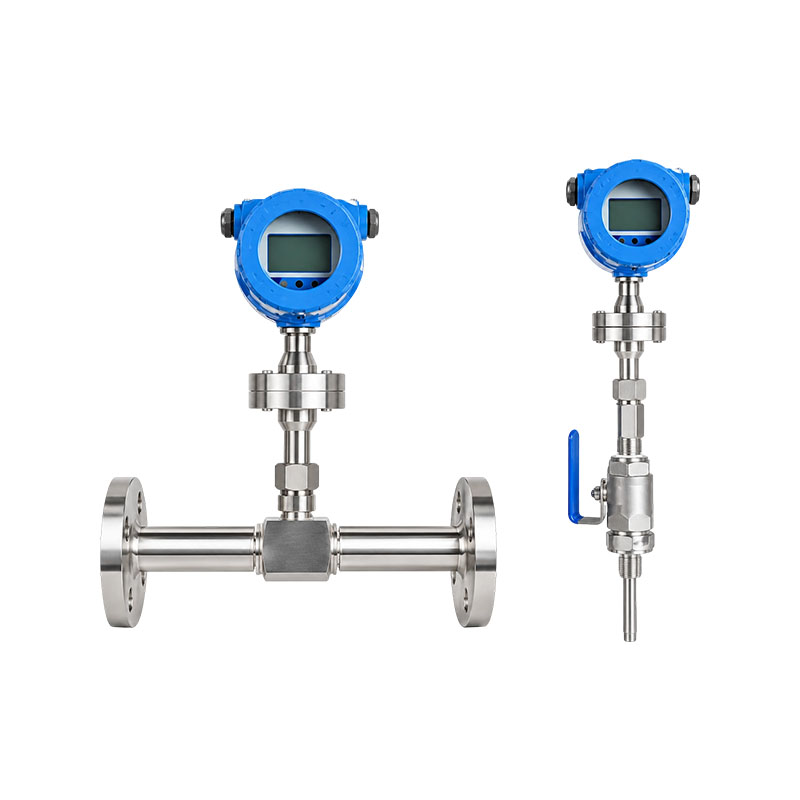

Q1: Do thermal gas mass flow meters require temperature and pressure compensation?
A: No need. It is based on the principle of thermal diffusion to directly measure gas mass flow rate, which is not affected by gas temperature and pressure fluctuations. It can directly output standard condition volume flow rate, eliminating the need for additional temperature and pressure compensation modules.
Q2: Can liquid droplets, high humidity, or vapor media be measured?
A: Cannot measure steam or liquid; Suitable only for the dry gas phase. If the gas carries a large number of condensed liquid droplets, the liquid adhering to the sensor will change the heat dissipation characteristics, causing reading drift and even damaging the probe. It is recommended to install a gas-liquid separator at the front end for wet conditions.
Q3: Will changes in gas composition affect measurement accuracy?
A: I will. The instrument is set according to the thermal conductivity parameters of the calibration gas (such as air, nitrogen) when it leaves the factory. Changes in gas composition and thermal conductivity will cause errors. The working conditions with frequently changing components require resetting the medium parameters or recalibration.
Q4: What are the requirements for installing straight pipe sections?
A: Generally, upstream ≥ 10D and downstream ≥ 5D straight pipe sections are required, where D is the inner diameter of the pipeline. Upstream elbows, valves, and reducers can disrupt the flow field, while shortening straight pipe sections can cause flow fluctuations and decreased accuracy. Avoid strong vibration and liquid accumulation during installation.