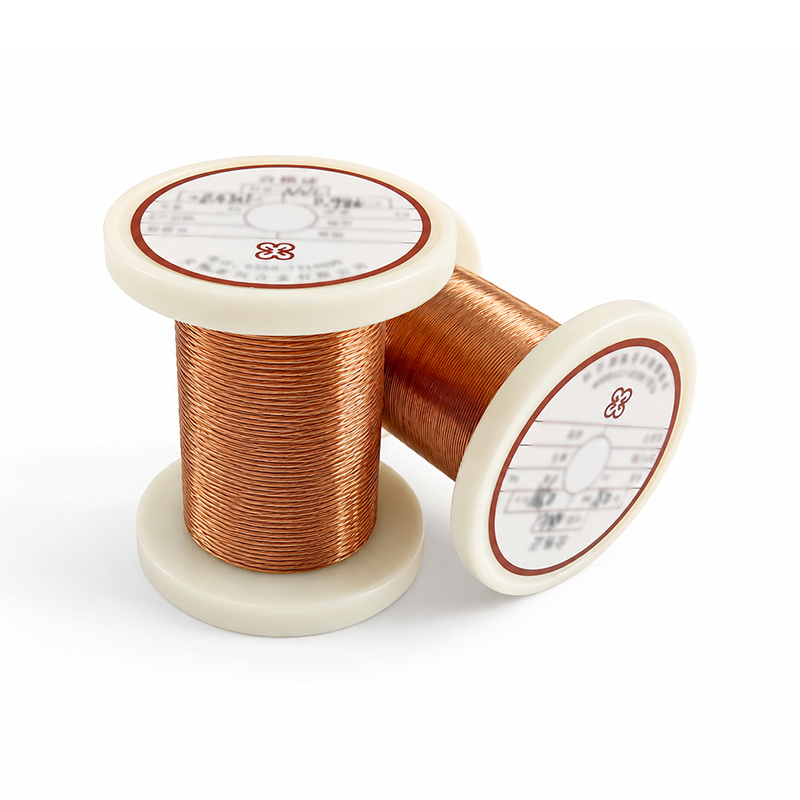
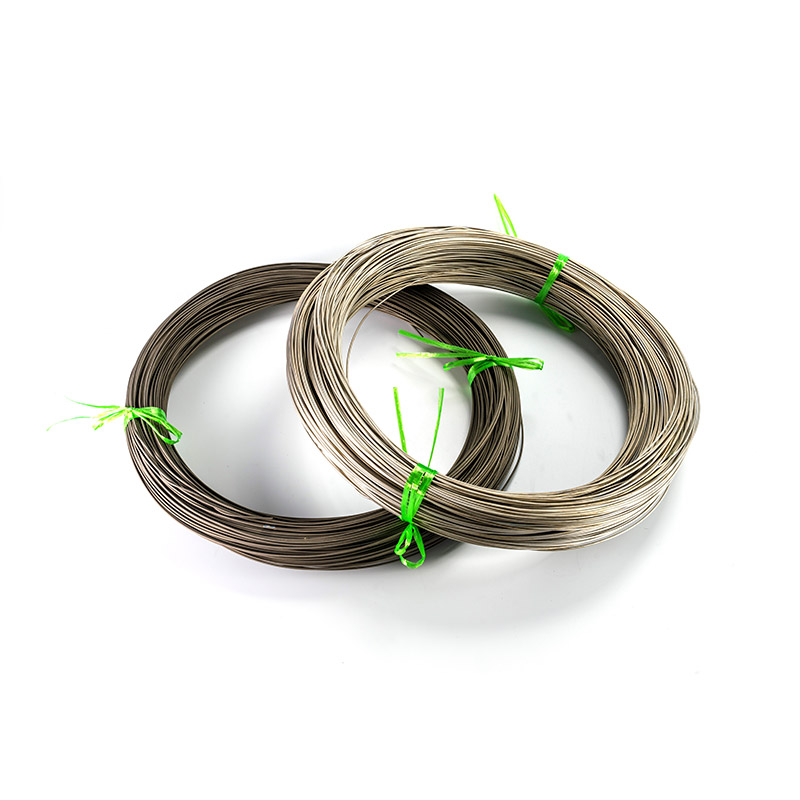
Alloy Wire Types, Structure, and Selection Guide for Industry
Alloy Wire: Direct Answer and Practical Overview
The direct answer is that alloy wirerefers to metal wire produced from a blended composition of two or more elements, engineered to deliver specific electrical, thermal, or mechanical properties that pure single-element wire cannot achieve on its own. Depending on the alloy family, this can mean precise electrical resistance for heating elements, stable voltage output for temperature sensing, or improved corrosion resistance for demanding industrial environments. Choosing the correct alloy wire type starts with identifying the primary function required, whether that is generating heat through controlled resistance, producing a measurable thermoelectric signal, or resisting corrosion and mechanical wear in a harsh operating environment.
This article reviews the common types and characteristics of alloy wire, explains the underlying working principles and structural considerations, outlines application scenarios and selection guidance, presents a detailed comparison across alloy families, and closes with maintenance guidance and frequently asked questions. A qualified Alloy Wire Manufacturer or Alloy Wire Factory typically produces multiple alloy families side by side, since resistance heating, temperature sensing, and precision instrumentation each call for a distinct composition and drawing process. Three data visualizations are included to illustrate composition distribution, resistivity behavior across temperature, and multi-factor performance comparison between alloy families.
Key takeaway: Alloy wire selection should begin with the intended function, resistance heating, signal generation, or structural resistance, rather than composition familiarity alone.
Common Alloy Wire Types and Their Characteristics
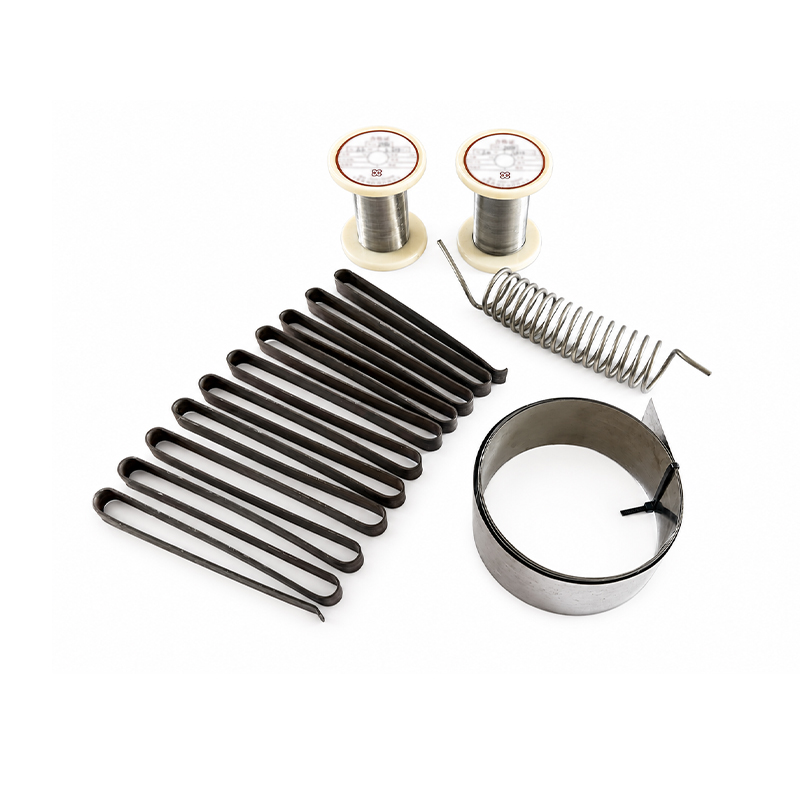
Alloy wire is generally grouped by its intended function, and each functional group draws on a different combination of base metals to achieve its target property. Resistance heating alloys, such as nickel-chromium and iron-chromium-aluminum compositions, are engineered for stable, predictable resistance under repeated thermal cycling. Thermocouple alloy wires, including K, N, E, J, and T type pairs, are formulated to produce a consistent thermoelectric voltage as temperature changes, making them the sensing element inside most industrial temperature probes. Precision resistance alloys are tuned for extremely low temperature coefficients, meaning their resistance value stays nearly constant across a wide temperature range, which is essential for precision instrumentation. Pure nickel wire, manganese-copper alloys, and Monel alloys round out the category, each selected for a specific combination of conductivity, corrosion resistance, or mechanical strength.
Iron-chromium-aluminum (FeCrAl) alloys: cost-efficient heating with good oxidation resistance at high temperatures.
Thermocouple alloy wires (K, N, E, J, T types): generate a stable thermoelectric voltage for temperature sensing.
Precision resistance alloys: low temperature coefficient of resistance for stable instrumentation readings.
Manganese-copper and Monel alloys: valued for corrosion resistance and mechanical durability in specialized environments.
A professionalChina manufacturer supporting instrumentation and heating industries typically maintains production capability across several of these alloy families, since a single customer order for temperature control equipment may require both a heating element alloy and a matched sensing alloy at the same time. Recognizing which functional category a project requires is the first step toward narrowing down the correct alloy wire specification.
Table 1: Common alloy wire families and their primary functional purpose.
Alloy Family
Composition Basis
Primary Function
NiCr Resistance Alloy
Nickel-Chromium
Heating elements
FeCrAl Alloy
Iron-Chromium-Aluminum
High-temperature heating
Thermocouple Alloy Wire
K / N / E / J / T Pairs
Temperature sensing
Precision Resistance Alloy
Manganese-Copper Base
Precision instrumentation
Key takeaway: Each alloy wire family is engineered around a specific function, so identifying the intended use narrows the correct composition quickly.
Working Principles and Structural Considerations
The performance of any alloy wire is governed by how its constituent metals interact at the atomic level, which determines resistivity, temperature coefficient, and thermoelectric behavior. In resistance heating alloys, the addition of chromium and aluminum to a nickel or iron base creates a stable oxide layer on the wire surface during initial heating cycles, which protects the underlying metal from further oxidation and extends service life. In thermocouple alloy wires, the specific electron behavior at the junction between two dissimilar alloys produces a small, temperature-dependent voltage known as the Seebeck effect, which is the working principle behind nearly all industrial temperature sensing. Precision resistance alloys are formulated so that their resistivity remains nearly flat across a wide temperature range, achieved by carefully balancing manganese and copper content to cancel out opposing temperature-dependent effects.
Wire Drawing and Structural Quality
Beyond composition, the wire drawing process itself has a significant effect on final performance, since uneven grain structure or surface defects introduced during drawing can create localized hot spots in heating elements or inconsistent readings in sensing wires. Multi-stage drawing with intermediate annealing steps helps maintain uniform grain structure and diameter tolerance, which is particularly important for thermocouple wire, where even minor composition or structural variation along the wire length can introduce measurement error. Surface finish also matters for heating alloys, since a smoother surface reduces localized oxidation points that could otherwise shorten element life under repeated thermal cycling.
Oxide layer formation: protects resistance heating alloys from further oxidation during use.
Seebeck effect: the working principle behind thermocouple alloy wire temperature sensing.
Grain structure uniformity: maintained through multi-stage drawing and annealing for consistent performance.
Surface finish: reduces localized oxidation and supports longer service life in heating applications.
Key takeaway: Consistent wire drawing and grain structure are as important to alloy wire performance as the base composition itself.
Data Visualization: Alloy Wire Application Share by Function
Before reviewing the chart below, it is useful to understand how demand is generally distributed across the major functional categories of alloy wire. Resistance heating applications tend to account for the largest portion of demand, since heating elements appear across a wide range of industrial and appliance equipment. Thermocouple and sensing wire follows closely, driven by steady demand from process industries that rely on continuous temperature monitoring. Precision resistance alloys occupy a smaller but consistent share tied to instrumentation and calibration equipment. Corrosion-resistant specialty alloys such as Monel round out the distribution, reserved for more specialized mechanical and chemical-exposure applications.
The horizontal bar chart above reflects a general demand pattern discussed across metallurgical and instrumentation industry references rather than a single proprietary dataset. Resistance heating alloys lead the distribution because heating elements are used across an extremely broad range of equipment, from industrial furnaces to household appliances, sustaining consistently high production volume. Thermocouple and sensing wire follows as the second largest category, reflecting the continued reliance on thermocouple-based temperature monitoring across power, petroleum, and chemical processing industries. Precision instrumentation alloys hold a smaller but stable share, tied closely to calibration equipment and laboratory instruments where temperature coefficient stability is prioritized over raw output volume. Corrosion-resistant specialty alloys, including Monel and manganese-copper compositions, represent a modest share reserved for applications involving marine environments, chemical exposure, or unusual mechanical stress. This distribution pattern tends to shift gradually as industrial automation expands, since more automated processes generally require additional sensing points relative to heating points. A China wholesale buyer sourcing a mixed alloy wire order should expect resistance heating and thermocouple sensing alloys to make up the majority share of a typical combined purchase. Recognizing this pattern can help buyers evaluate whether a supplier's production capacity and inventory align with common industrial demand. An OEM supplier serving diverse sectors typically balances capacity across these categories rather than concentrating entirely on one function. Overall, the chart illustrates that alloy wire demand follows functional application patterns closely tied to broader industrial equipment trends rather than any single dominant use case.
Application Scenarios and Selection Guide
Selecting the correct alloy wire begins with clearly identifying whether the application calls for heating, sensing, or structural resistance, since each function draws on a fundamentally different set of material properties. A furnace or industrial oven heating element generally requires a nickel-chromium or iron-chromium-aluminum alloy sized to deliver the target wattage while surviving repeated thermal cycling without embrittlement. A temperature monitoring point instead requires a matched thermocouple alloy pair selected for the expected temperature range and surrounding atmosphere, paired with compensation cable of the same alloy composition to avoid introducing signal error. Precision measurement equipment, such as calibration standards or laboratory resistors, calls for a low temperature coefficient alloy where resistance stability across ambient temperature swings matters more than raw conductivity.
Heating Element Applications
Furnaces, ovens, and heating tape applications typically call for nickel-chromium or iron-chromium-aluminum wire selected according to target resistance value and operating temperature ceiling.
Sensing and Instrumentation Applications
Temperature monitoring and calibration equipment rely on thermocouple or precision resistance alloys matched to the expected range and required signal stability.
For applications involving mechanical stress or corrosive exposure, such as marine fittings or chemical processing equipment, manganese-copper or Monel alloy wire offers a durable and reliable option where standard resistance or sensing alloys would degrade prematurely. Wire diameter and stranding also factor into selection, since thicker gauges handle higher current loads in heating applications while finer gauges are often preferred for compact sensing assemblies. A China producer supporting varied industrial sectors typically offers configurable diameter, temper, and packaging options so the wire can be matched precisely to the intended installation rather than adapting the application to a fixed standard product. Working with an experienced Alloy Wire Manufacturer also helps ensure that composition tolerances remain consistent across production batches, which is particularly important for thermocouple applications where even small compositional drift can shift the voltage output curve.
Key takeaway: Matching alloy wire composition, diameter, and temper to the specific application prevents premature failure and measurement drift.
Data Visualization: Resistivity Behavior Across Temperature
Understanding how resistivity changes with temperature is essential for engineers designing heating elements or precision instrumentation, since this relationship directly affects power output consistency and measurement accuracy. The line chart below compares the general resistivity trend of a standard nickel-chromium heating alloy against a precision low-temperature-coefficient alloy across a representative temperature range. This comparison follows well-documented metallurgical behavior discussed in materials engineering references rather than a single proprietary test result. Nickel-chromium alloys are expected to show a moderate, fairly linear increase in resistivity as temperature rises, which is generally accounted for in heating element design calculations. Precision alloys, by contrast, are specifically engineered to minimize this change, keeping the line nearly flat across the same range.
The line chart shows the nickel-chromium heating alloy resistivity rising steadily as temperature increases, which is expected behavior and is factored directly into heating element wattage calculations by design engineers. This rising trend explains why heating elements often show slightly higher power draw when cold and gradually stabilize as they reach operating temperature. The precision alloy line, by comparison, stays nearly flat across the same temperature range, demonstrating the compositional balancing that manganese-copper alloys are specifically formulated to achieve. This flat behavior is exactly why precision resistance alloys are chosen for calibration standards and laboratory instruments, where any significant resistivity drift would introduce measurement error as ambient conditions change. The gap between the two lines widens as temperature increases, illustrating that the difference between these alloy families becomes more pronounced under higher thermal load rather than at room temperature alone. For heating element designers, this relationship means resistance values must be calculated at the actual operating temperature rather than at room temperature alone, since using room-temperature resistance for a high-temperature heating calculation would understate the actual power draw. For instrumentation designers, the flat precision alloy line confirms why this material family remains the standard choice for reference resistors and bridge circuits despite its higher raw material cost relative to general-purpose resistance wire. This comparison also demonstrates why substituting one alloy family for another without adjusting the design calculation can lead to unexpected performance differences in the field. A China supplier offering both alloy families under one production roof allows engineers to source matched components for combined heating and sensing systems from a single, consistent source. Overall, the chart reinforces that resistivity behavior across temperature is a defining characteristic separating heating alloys from precision instrumentation alloys, rather than a minor technical detail.
Comparing alloy wire families side by side clarifies why no single composition serves every industrial function equally well. The table below summarizes maximum operating temperature, corrosion resistance, and typical application focus across four commonly specified alloy families, offering a practical starting point before consulting detailed material datasheets.
Table 2: Comparative reference across common alloy wire families.
Alloy Family
Max Operating Temp
Corrosion Resistance
NiCr (80/20)
Approx. 1150C
Moderate to High
FeCrAl
Approx. 1300C
High (oxide layer)
Thermocouple K-type
Approx. 1260C
Moderate
Monel Alloy
Approx. 500C
Very High
Key takeaway: Maximum operating temperature and corrosion resistance move in different directions across alloy families, making application context essential to a sound selection.
Data Visualization: Stacked Comparison of Key Selection Factors
A stacked column comparison is useful when several selection factors need to be weighed together across alloy families rather than viewed one metric at a time. The chart below breaks down three relative factors, thermal performance, corrosion resistance, and mechanical workability, across the four alloy families introduced earlier. Viewing these factors stacked together highlights how a family that scores well on one factor may trade off against another. This approach mirrors how engineers typically weigh multiple requirements simultaneously rather than optimizing a single property in isolation. The stacked format also makes it easier to visually compare relative balance across families at a glance.
The stacked column chart shows FeCrAl alloys carrying the tallest overall bar, driven primarily by strong thermal performance, which reflects their common use in high-temperature furnace and industrial oven heating elements. NiCr alloys show a more balanced stack across all three factors, which helps explain their status as the most widely specified general-purpose resistance heating alloy across moderate-to-high temperature applications. Thermocouple K-type wire shows a stack weighted toward thermal performance and workability rather than corrosion resistance, consistent with its role as a sensing element that is typically protected by a separate sheath rather than exposed directly to corrosive media. Monel alloy shows the opposite pattern, with corrosion resistance forming the largest portion of its stack, reflecting its specialization for marine and chemical-exposure applications rather than high-temperature heating duty. This visual comparison reinforces that no alloy family maximizes all three factors simultaneously, which is consistent with general metallurgical principles where composition changes that improve one property often come at a modest cost to another. Engineers selecting between FeCrAl and NiCr for a heating application, for example, often weigh FeCrAl's higher temperature ceiling against NiCr's typically better mechanical workability during coil winding or forming. Similarly, choosing Monel over a standard thermocouple sheath material involves accepting a lower maximum operating temperature in exchange for substantially improved corrosion resistance. A China factory producing across multiple alloy families can guide buyers through these trade-offs based on documented material properties rather than general assumptions. This kind of multi-factor comparison is particularly useful during new product development, when an engineering team is evaluating alloy options for a first-time application. Ultimately, the stacked chart demonstrates that alloy wire selection is best approached as a weighted trade-off exercise rather than a search for a single universally superior composition.
Maintenance and Handling Guidance
Proper handling and periodic inspection extend the service life of alloy wire across both heating and sensing applications. Heating elements should be inspected for surface discoloration, localized thinning, or visible hot spots, which often indicate uneven current distribution or accumulated oxidation damage at specific points along the wire. Coiled or wound heating elements should also be checked for sagging or distortion, since loss of coil spacing can create localized overheating that accelerates further degradation. Thermocouple and sensing alloy wires should be inspected at connection points for corrosion or looseness, since a compromised junction connection can introduce measurement error that mimics sensor drift even when the alloy wire itself remains within specification.
Heating Element Check
Inspect for discoloration, thinning, or coil distortion that may indicate uneven current distribution or oxidation damage.
Junction Connection Check
Verify sensing wire connections remain tight and free of corrosion to prevent signal drift at the measurement point.
Storage Condition Check
Store unused alloy wire in a dry, low-humidity environment to prevent surface oxidation before installation.
Storage conditions matter more than is often assumed, since alloy wire left in humid or poorly ventilated storage can develop surface oxidation before it is even installed, which may affect resistance consistency in precision applications. Handling during installation should avoid sharp bending or kinking, particularly for finer gauge sensing wire, since a kink can create a localized stress point that becomes a failure site under later thermal cycling. Working with a reliableODM factory that documents composition tolerances and recommended handling practices helps installation and maintenance teams set realistic inspection intervals based on actual material behavior rather than generic assumptions carried over from unrelated wire products.
Key takeaway: Careful handling, dry storage, and periodic visual inspection together prevent most alloy wire performance issues before they affect equipment operation.
Manufacturing Background and Supporting Product Range
Consistent alloy wire performance depends heavily on composition control and drawing precision maintained across every production batch. Xinguo Group Co., Ltd., founded in 1997 and headquartered in Tianchang City, Anhui Province, operates as a high-tech enterprise whose subsidiaries include Anhui Xinguo Instrument Co., Ltd. and Anhui Xinguo Alloy Co., Ltd., supporting an integrated approach that spans instrumentation, cabling, and alloy wire production under one group structure. The Group's broader product portfolio includes power cables, control cables, and compensation cables that are directly compatible with the alloy wire products described in this article, allowing combined sourcing for projects that require both sensing wire and matched connection cabling.
Anhui Xinguo Alloy Co., Ltd., a subsidiary dedicated specifically to precision alloy materials, manufactures a broad range of alloy wire products including thermocouple alloy wires across K, N, E, J, and T types, corresponding compensation alloy wires, high-resistance heating alloys, precision resistance alloys, heating resistance alloys, pure nickel wires, manganese-copper alloys, and Monel alloys. As a council member of the Instrument Materials Branch of China Instrument & Control Society, the subsidiary supports applications spanning aviation, petroleum, chemical engineering, machinery manufacturing, and power industries. A China exporter or OEM/ODM manufacturer with this breadth of alloy wire capability under one production structure is generally well positioned to supply matched heating, sensing, and precision resistance wire for combined equipment projects rather than requiring buyers to coordinate multiple unrelated suppliers.
Key takeaway: A production base spanning multiple alloy wire families supports more consistent sourcing for projects that combine heating, sensing, and precision instrumentation needs.
Frequently Asked Questions About Alloy Wire
Q1: What is the difference between resistance heating alloy wire and thermocouple alloy wire?
Resistance heating alloy wire is formulated to generate heat through electrical resistance, while thermocouple alloy wire is formulated to generate a small thermoelectric voltage for temperature sensing rather than heat output.
Q2: Why does resistivity change with temperature matter for wire selection?
Resistivity change affects power output consistency in heating elements and measurement stability in instrumentation, so alloy families are chosen specifically based on how much their resistance shifts across the expected operating temperature range.
Q3: Can alloy wire be customized for specific project requirements?
Yes, an OEM manufacturer or ODM manufacturer can typically configure diameter, temper, and packaging based on drawings or technical specifications provided by the buyer.
Q4: How should alloy wire be stored before installation?
Alloy wire should be stored in a dry, low-humidity environment to prevent surface oxidation, which can affect resistance consistency in precision or sensing applications if left uncontrolled.
Q5: What causes premature failure in heating alloy wire?
Premature failure is often linked to uneven current distribution, coil distortion, localized oxidation damage, or operating the wire beyond its rated maximum temperature over extended periods.
Q6: How should buyers evaluate a new alloy wire supplier?
Buyers should review composition specifications, request resistivity or temperature-coefficient documentation, and confirm the Alloy Wire Factory maintains consistent process control across melting, drawing, and annealing stages.
A heat-treatment line that replaced its protection tubes every six weeks did not have a thermocouple problem. It had a ceramic problem. The elements came out of service clean and unbroken, yet the tubes had cracked, spalled or bowed, and the drift that followed belonged to the t...
The first sign that something is wrong with a thin film RTD is rarely a dramatic failure. It is a slow disagreement with a neighbouring sensor, a reading that creeps during a heat-up cycle, or a batch trend that no longer matches the recipe. In one case, a food processor replace...
A dairy processor in eastern China spent three weeks chasing a pasteurizer fault that turned out to be one crossed thermocouple extension wire inside a junction box. The recorder kept writing believable numbers the whole time, which is precisely why the investigation took so lon...
A heat-treat line running at 900 degrees Celsius will usually consume a Type K thermocouple in eight to fourteen months. The same probe sitting in a clean water loop at 90 degrees Celsius often survives eight years or more. Nothing about the two probes looks different on a datas...





 INQUIRY
 English
 عربى
عربى русский
 中文简体
中文简体