A sterilizer chamber reads 121 °C on the panel while the independent chart recorder says 124 °C. The maintenance team spends a morning chasing steam valves and traps before someone finally checks the temperature sensor, which turns out to be the only thing on the skid that was quietly lying. Nobody much cares what kind of sensor it is until it starts giving wrong numbers. That is usually the moment the question comes up: what is RTD, really, and why does the plant standardize on it?
The short answer is that an RTD is a resistance temperature detector, a passive sensor built around a precisely characterized piece of metal whose electrical resistance rises as it gets hotter. A typical platinum element reads 100.00 ohms at 0 °C and about 138.5 ohms at 100 °C. That small, repeatable change in resistance is what makes it the go-to choice when a process cannot afford drift.
The definition is easy. Everything that follows is not: which element construction, which tolerance class, which wiring arrangement, which sheath, which manufacturer, and whether the extra money for a tighter grade actually buys anything on your line.
An RTD converts temperature into resistance in a predictable, repeatable way, which is precisely why it is trusted wherever a wrong reading costs real money.
A resistance temperature detector is a resistor that changes value with temperature, packaged so that change can be measured accurately and repeatedly. That single idea is the whole category. There is no junction, no thermoelectric voltage, and no cold junction compensation involved. You push a small excitation current through the element, you read the resulting voltage, and you calculate the temperature from a known resistance curve.
Platinum dominates for good reasons. It is chemically stable, it tolerates repeated temperature cycling without wandering, and its resistance-to-temperature relationship is close to linear over the ranges most plants actually operate in. The IEC 60751 curve uses a temperature coefficient of 0.00385 per ohm per degree, giving roughly 0.385 ohms of change per degree on a Pt100. The older American curve uses 0.00392, and the two are not interchangeable when you are chasing a tight tolerance.
Once you know the naming convention, the catalogue stops looking like a code book:
One distinction that saves arguments later: an RTD is the sensing element, not the electronics behind it. A temperature transmitter is a separate device that converts the resistance into a 4-20 mA loop signal. If the transmitter fails, the RTD may be perfectly healthy, and replacing the sensor will not fix anything.
An RTD is a metal resistor with a known temperature curve; the Pt100 label simply tells you the metal, the nominal resistance at 0 °C, and which standard curve applies.
The chain from process fluid to control room display has four links, and any one of them can quietly ruin the measurement.
Either a platinum wire wound on a ceramic or glass former, or a thin platinum film deposited on a substrate and laser trimmed to value. Temperature changes, resistance changes, and the relationship between them is known to a fraction of a degree.
This is where most accuracy quietly disappears. On a Pt100, each 0.1 ohm of unwanted lead resistance looks like roughly 0.26 °C of error, because the sensitivity is only 0.385 ohms per degree. A few metres of thin copper, a corroded terminal block, and a loose screw can drag a Class A sensor down to Class B behaviour without anyone noticing. On a Pt1000 the same lead resistance matters ten times less, which is one reason it is popular where cable runs are long and terminals get neglected.
Stainless steel sheath, ceramic terminal block, aluminium or stainless connection head, and often a machined thermowell. The protection is what keeps the element alive, and it is also what slows response time down. A heavy thermowell protects well and responds slowly; a fine sheath responds quickly and gets damaged sooner.
Either a dedicated temperature transmitter producing 4-20 mA, a HART or digital signal, or a direct RTD input card on a PLC or DCS. Direct input is cheap but limited by cable length and noise. A local transmitter costs more and is far more forgiving in a real plant.
One effect that rarely makes it onto a datasheet discussion is self-heating. The excitation current flowing through the element generates a tiny amount of heat. In ten milliamps and a well-agitated liquid, it is invisible. In stagnant gas inside a small sheath, it can add a measurable offset. Good instruments pulse the excitation or keep current low precisely for this reason.
Most RTD accuracy problems are not element problems at all; they start in the lead wires, the connections, and the excitation method long before they reach the platinum.
Platinum wire is wound onto a ceramic or glass mandrel and typically sealed in a small housing. These elements are known for long-term stability and for holding their calibration through many temperature cycles. They also tend to be physically larger, so they respond a little more slowly, and a loosely wound element can be vulnerable to sustained vibration. In high-temperature or high-accuracy service, that trade is usually worth making.
A platinum layer is deposited on a ceramic substrate and trimmed by laser to the target resistance. This is the dominant technology today. Thin-film elements are compact, fast responding, and, when properly annealed and stress-relieved at the factory, they cycle well. Almost every volume-produced industrial RTD uses one.
Two sensors with the same "Pt100 Class A" label can behave very differently after three years in a steam line. The difference is rarely the element specification on the certificate. It is how the element was stabilized, how it was seated inside the sheath, how the assembly was sealed, and whether the finished unit was individually tested or sampled from a batch.
For a single critical measurement on a reboiler, the better element construction is cheap insurance. For five thousand units going into packaged HVAC equipment, the calculation flips and the question becomes whether the supplier can hold consistency across the whole volume. Those are different procurement problems with different answers, and the label alone does not solve either.
Element construction decides how the sensor behaves after a few thousand temperature cycles, long after the certificate has been filed away.
Catalogue names look chaotic until you realize that each one describes the same element plus a different answer to one of three questions: what is it made of, how is it built, and where does it have to survive.
Pt100 remains the industrial default. Pt1000 shows up where lead resistance is a genuine problem, where the housing is very small, or where a low-cost two-wire connection has to do the job. Nickel and copper variants still appear in legacy equipment and in markets where their standards were historically established, but a new design rarely picks them.
The names look like a product list. In practice they are a checklist of the hazards at the measuring point, and choosing between them is a matter of matching the protection to the process rather than reading the specification harder.
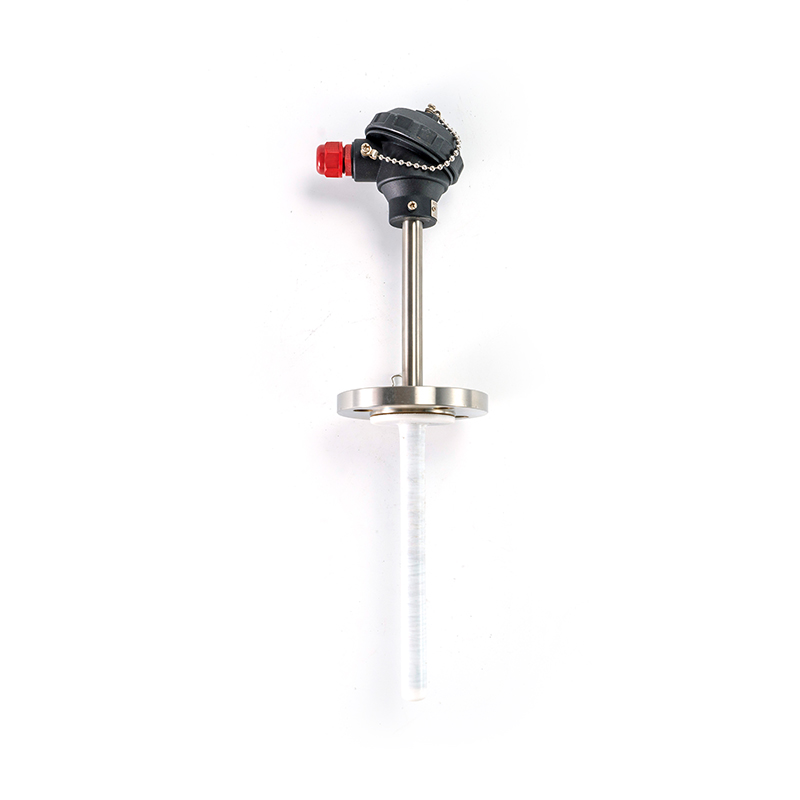
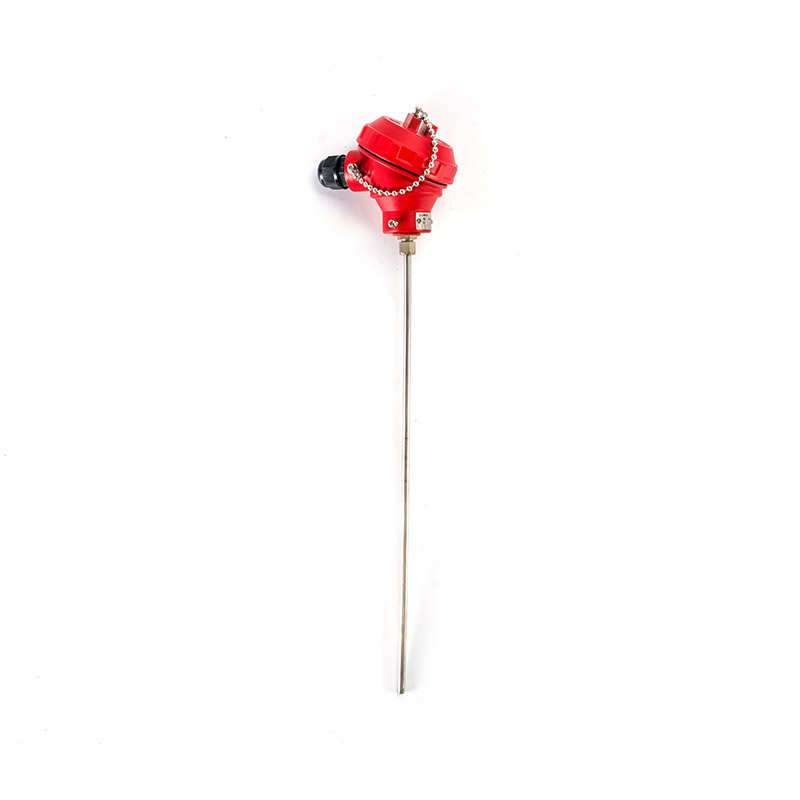 Sheathed RTD for Space-Limited Industrial Temperature MeasurementA compact stainless-steel sheathed RTD suited to tight spaces, fast thermal response, and reliable temperature readings in industrial or laboratory installations.View Product →
For tight spaces and quick response, a sheathed unit is often the most practical route. Where the location is classified, the certified head and housing matter more than the element grade.
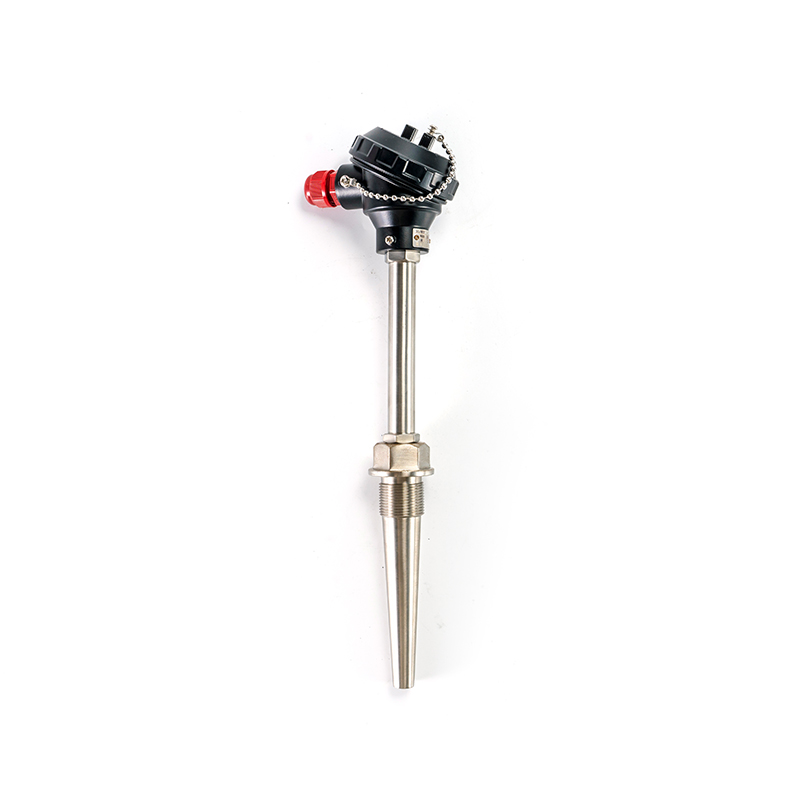
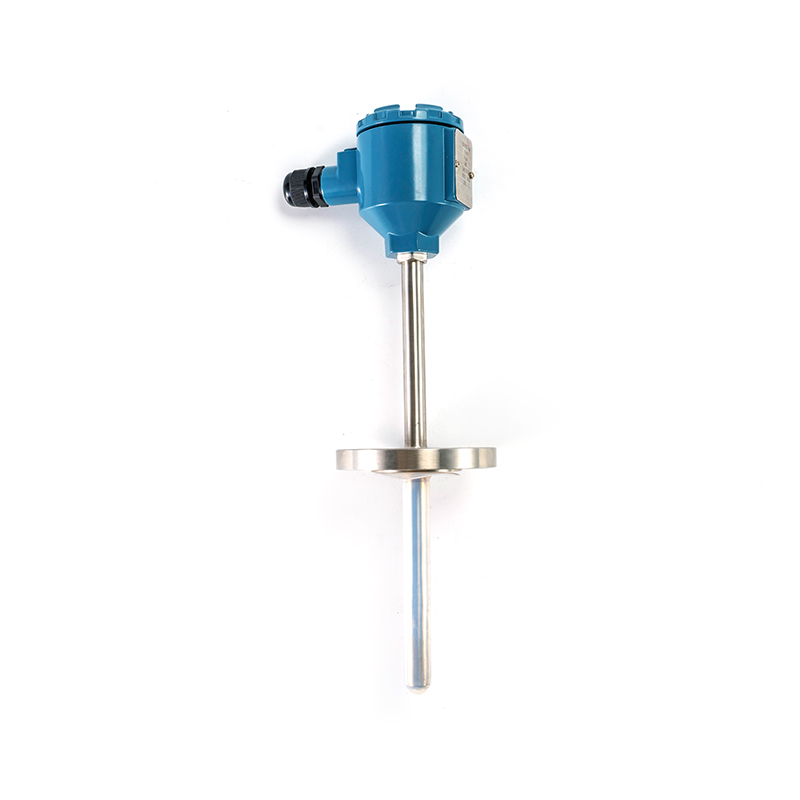 Explosion-Proof RTD for Hazardous Process Temperature MonitoringA robust sensor for explosive gas, vapor, or dust areas, providing stable temperature measurement for process control and safety monitoring in hazardous plants.View Product →
And in abrasive duty, the sheath is the component that decides the maintenance interval, not the platinum inside it.
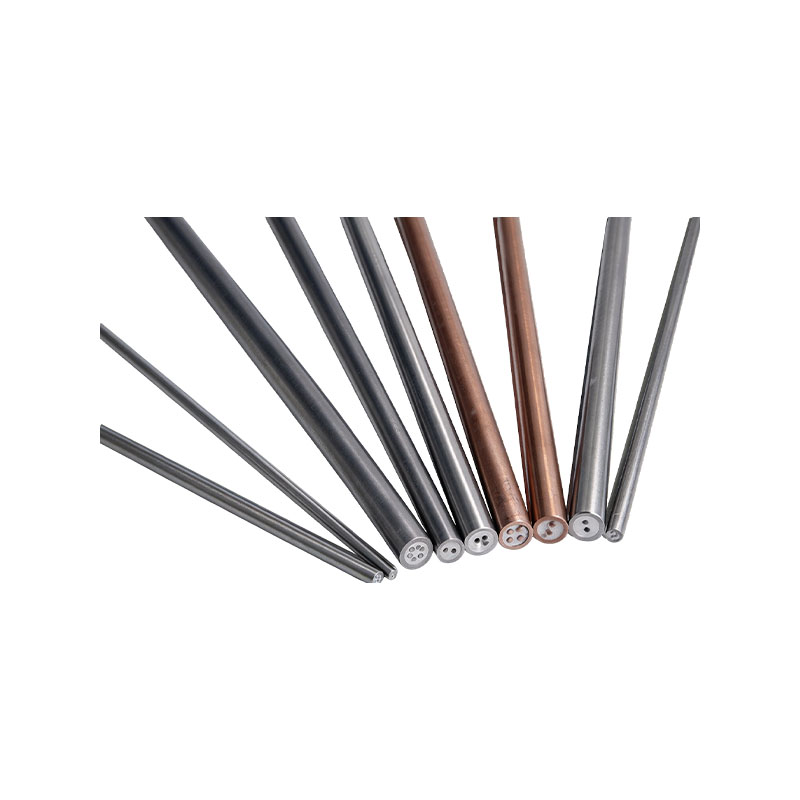
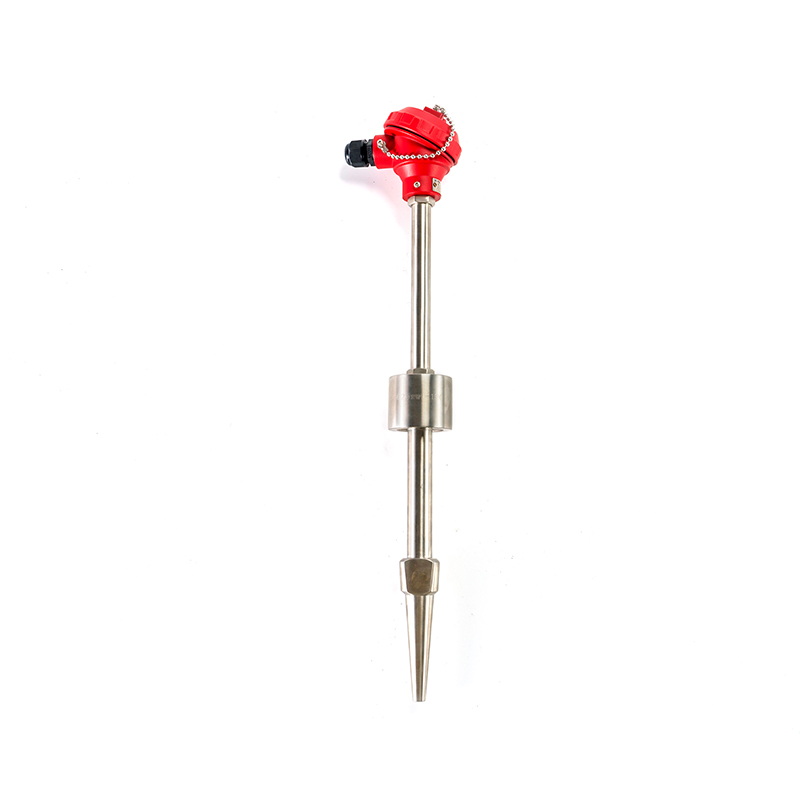
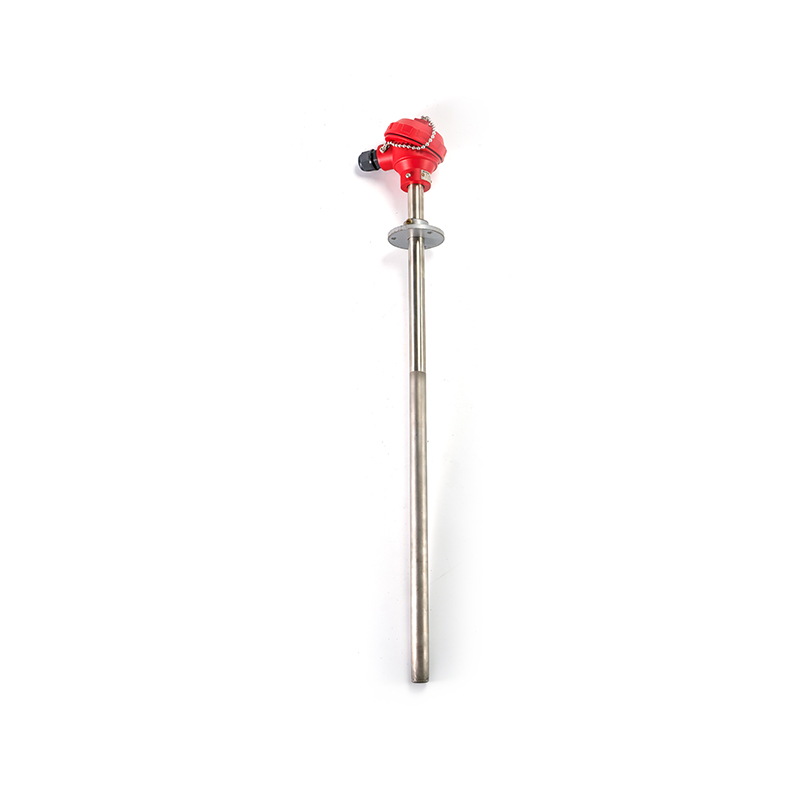 Abrasion-Resistant RTD for Harsh High-Temperature Industrial ServiceBuilt for wear-prone, high-temperature environments such as kilns and fluidized beds, this sensor is intended for reliable temperature monitoring under particle erosion and thermal stress.View Product →
The RTD type is really a description of the environment it has to survive; pick the protection first and the element grade second.
Tolerance grades follow IEC 60751, and the maths is simple enough to keep in your head. The grade is expressed as a base tolerance plus a coefficient multiplied by the absolute temperature.
| Accuracy class | Tolerance at 0 °C | Tolerance at 100 °C | Typical service |
|---|---|---|---|
| Class B | ±0.30 °C | ±0.80 °C | General industrial, HVAC, condition monitoring |
| Class A | ±0.15 °C | ±0.35 °C | Process control, food and beverage, pharmaceutical |
| Class AA | ±0.10 °C | ±0.27 °C | Reference measurement, high-value batches, laboratories |
| 1/3 Class B | ±0.10 °C | ±0.27 °C | Retrofit accuracy in a limited temperature band |
The chart below shows the same information as relative width. The narrower the band, the tighter the sensor holds the process setpoint, and the more the surrounding installation has to be built to support it.
Reading the chart in practical terms: moving from Class B to Class A halves the allowance, which sounds dramatic until you compare it with the error the installation itself contributes. A sensor mounted too shallow in a pipe, sitting in a pocket of stagnant fluid, can easily be one or two degrees off regardless of grade. So the useful question is never "what is the best class" but "what class can this installation actually support".
There is also a cost question. A tighter grade raises unit price modestly in isolation, but it forces tighter control of the whole installation: better thermowells, proper immersion, four-wire connections in some cases, and more frequent calibration. On a pasteurizer where a fraction of a degree decides whether a batch passes, that is money well spent. On a cooling water return line where a trend is all anyone needs, Class B is entirely adequate and spending more is simply decoration.
Buying a tighter accuracy class only pays off after the immersion depth, thermowell and wiring are good enough to preserve it.
These three technologies overlap at room temperature and diverge sharply at the edges. Since the question "what is RTD" usually comes with the follow-up "why not just use a thermocouple", the comparison is worth setting out plainly.
| Property | RTD (Pt100 / Pt1000) | Thermocouple | Thermistor |
|---|---|---|---|
| Typical range | -200 to 600 °C, some to 850 °C | -200 to 1260 °C, higher with noble metals | -50 to 150 °C |
| Accuracy | High and stable over time | Moderate, prone to drift | Very high in a narrow band |
| Linearity | Good | Poor without linearization | Poor, highly curved |
| Response speed | Moderate | Fast | Fast |
| Lead wire effect | Needs compensation or three-wire connection | Requires matched extension wire | High impedance, sensitive to self-heating |
| Relative unit cost | Moderate to high | Low for base metal types | Low |
| Best fit | Precision process measurement | Furnaces, flue gas, high temperature | HVAC, appliances, battery packs |
The decision rules that hold up in practice:
Thermocouples are not worse instruments, they are different instruments. They generate their own voltage, run on almost nothing, and survive places where a platinum element would not last a week. The confusion comes from comparing them on accuracy alone, where the RTD wins, and ignoring everything else, where the thermocouple often wins. A useful side-by-side of junction types and sheath styles is covered in this guide on thermocouple selection for industrial service.
Pick the RTD when stability matters, the thermocouple when the environment is hostile, and never pick either purely on the datasheet number.
The wiring configuration decides how much of the lead resistance ends up in your measurement. It is a five-minute decision with a five-year consequence.
| Configuration | How it works | Practical effect | Where it fits |
|---|---|---|---|
| Two-wire | One lead in, one lead out | Lead resistance adds directly to the reading | Short runs, Pt1000, non-critical indication |
| Three-wire | Compensation assumes equal lead resistance | Removes most lead error | The industrial default for Pt100 |
| Four-wire | Separate current and voltage pairs | Lead resistance effectively eliminated | Laboratory, calibration, long cable runs |
Three-wire is the compromise most plants settle on, and it works well as long as the leads really are matched and the terminals stay clean. The failure mode to watch for is slow and invisible: a corroded terminal adds resistance to one leg only, the compensation assumption breaks down, and the reading drifts by a fraction of a degree every few months. Nobody notices until a batch fails or a calibration audit turns it up.
Four-wire is worth the extra conductor whenever the measurement is a reference, the cable is long, or the sensor is Pt100 in a low-temperature range where the ohm-per-degree sensitivity is at its weakest. It also makes troubleshooting straightforward, because a wire problem shows up as an open circuit rather than a quiet offset.
A three-wire connection only works while the leads stay matched, so terminal condition is part of the measurement, not part of the maintenance schedule.
Almost anyone can supply a "Pt100 Class A sheathed RTD". The differences that decide whether it survives five years are in places the datasheet rarely reaches.
Procurement risk usually arrives disguised as an improvement. Swapping a Pt100 for a Pt1000 without changing the transmitter range gives a reading off by a factor of ten, and the symptoms look like a wiring fault. Reversing that swap is subtler still, because the offset can look like a plausible process change for weeks. The same logic applies to curve standards: an American 0.00392 element in a system configured for 0.00385 will read slightly high at temperature, and the error is small enough to be blamed on something else entirely.
When sourcing, whether from a manufacturer, a supplier, or a wholesaler, these are the questions that separate a serious partner from a catalogue:
The last point sounds trivial and is not. Clear, permanent marking on the head, the tag and the certificate prevents a whole category of maintenance error that no amount of calibration can catch afterwards.
Two sensors that carry the same accuracy label can have completely different service lives, and the difference lives in sealing, stabilization and testing rather than in the certificate.
A good sensor in a poor installation reads badly, and the sensor gets the blame. These are the details that matter most.
The general rule for pipes is at least ten sheath diameters of immersion, measured from the tip inward, so that the sensing element sits in the flowing stream and not in the thermal gradient near the wall. Small pipes usually cannot offer that depth, which is why a reducer, an elbow installation, or a smaller sheath diameter becomes necessary.
Heavy-wall wells protect the sensor from pressure and flow, and they slow response. Thin-wall wells respond quickly and wear faster. The well material has to match the process fluid, and the well itself should be pressure-rated and, in hygienic service, crevice-free.
If the base of the sheath sits against a cold pipe wall, heat travels down the stem and pulls the reading low. If the head sits in direct summer sun, the reading climbs. Neither fault is visible in the sensor, and both are common.
Full pipe, moving fluid, no trapped air, no dead legs. A sensor in a pocket of stagnant liquid is measuring the pocket, not the process, and no accuracy class can rescue it.
A probe that survives temperature but fatigues at the root under pump vibration has a mechanical problem, not a thermal one. Shortening the unsupported length or moving the mounting point does more than upgrading the element.
Immersion depth and thermowell design change the reading more than one step of accuracy class ever will.
The same characteristics, stability, repeatability, and a clean electrical signal, make RTDs the natural choice in a fairly consistent set of industries.
Across all of these, the same pattern holds. The RTD is chosen not because it is the cheapest way to read a temperature, but because the number it produces stays believable without constant attention.
RTDs earn their place wherever the measurement has to remain trustworthy months after installation, with nobody watching it.
Knowing the failure signature shortens troubleshooting considerably, and it also tells you which spare to keep on the shelf.
Of that list, only the first announces itself. The other five produce readings that look reasonable, which is exactly why they persist. A routine comparison between the RTD reading and an independent reference at a known condition catches more of them than any amount of visual inspection.
The dangerous RTD failures are the ones that still produce a number; an obvious fault is a nuisance, a quiet offset is a quality incident.
It stands for resistance temperature detector. Inside is a small metal resistor, usually platinum, whose resistance rises predictably as it warms. Measure the resistance accurately and you know the temperature.
RTD is the general category. Pt100 is one specific version, using platinum with 100 ohms at 0 °C. There are also Pt1000, Ni100 and Cu50 variants within the same family.
Three-wire is better for a Pt100 on anything longer than a short lead, because it compensates for lead resistance. Two-wire is acceptable for Pt1000 or for indication where a small offset does not matter.
Common industrial units cover -200 to 600 °C, with some designs reaching 850 °C. Above that, thermocouples take over because platinum elements become impractical.
Most often it is a terminal or lead resistance issue rather than the element itself. A corroded connection adds resistance, which looks like rising temperature. Check terminals and insulation resistance before replacing the sensor.
Yes, with a certified explosion-proof housing and the appropriate approvals for the zone and gas group. The certification applies to the assembly, so mixing a certified head with an uncertified probe body is not acceptable.
Because the resistance change per degree is ten times larger, lead resistance and contact resistance matter far less. That makes Pt1000 attractive for long cable runs, small housings and two-wire connections.
It depends on duty. A critical pharmaceutical loop may be verified annually, a utility monitoring point may go five years. High cycling, high temperature and vibration all shorten the interval. The right answer comes from your own drift history, not from a generic table.
Usually the element and sheath are replaced rather than repaired. Connection heads, terminal blocks and thermowells are often reusable, which is worth remembering when costing a replacement.
Only in a good installation. Immersion depth, thermowell design, wiring and ambient conditions all add error that the class figure does not include. The installed accuracy is what the loop actually delivers.
Most RTD questions come down to one theme: the element defines the potential accuracy, and the installation decides how much of it you keep.
So what is RTD, after all this? It is a platinum resistor with a documented temperature curve, wrapped in whatever protection the process demands, wired in a way that preserves the measurement, and installed with enough care that the curve still means something. The technology has not changed fundamentally in decades, and that is exactly the point. It is predictable, it is repeatable, and when it goes wrong it usually does so for reasons you can find.
The practical takeaway is that specification, supply quality and installation are not three separate decisions. A Class AA element behind a poorly sealed head in a shallow pocket will underperform a well-built Class B unit every time.
Working on a temperature measurement project? Share the process conditions, the required accuracy and the environment, and our engineering team can help match a sensor assembly to the duty rather than to a catalogue page.
Talk to the temperature instrument team about your application
An RTD is only as accurate as the assembly around it and the installation beneath it; get those right and the platinum will keep its promise for years.

A stainless-steel probe on a pasteurizer reads 71.8 °C while a calibrated handheld reference shows 72.4 °C. Half a degree sounds harmless until that line has a 0.5 °C quality limit and the batch gets held for review. Nine times out of ten, the probe is not broken. The reading is...

A sterilizer chamber reads 121 °C on the panel while the independent chart recorder says 124 °C. The maintenance team spends a morning chasing steam valves and traps before someone finally checks the temperature sensor, which turns out to be the only thing on the skid that was q...
A maintenance team replaces a two wire sensor on a 60 m line with a three wire RTD, expecting the reading to land closer to the laboratory value. Instead it settles about 2.9 °C high. The element is inside tolerance, the transmitter has a fresh calibration sticker, and the wirin...
A threaded RTD probe almost never fails at the point where it measures temperature. It fails where it touches the plant. A maintenance crew pulls one out of a glycol header on a Tuesday afternoon, finds the threads galled and the sheath slightly bent, and reorders from the same ...



 INQUIRY
 English
 عربى
 русский
 中文简体